Search This Blog

Showing posts with label Power. Show all posts

Monday, March 1, 2010

Nissan Tiida to L12F

Nissan Sentra Bluebird Sylphy Tiida Latio is merged for one model is Nissan L12F.
The coming up of Nissan Sentra is merged with Nissan Bluebird Sylphy and Nissan Tiida Latio as The Only ONE Model,cause of Main perposing of C-segment Sedan comes to Asia and US more than declind market is japan

So Now This project called L12F for Global C-Segment Sedan ,This model is revolution of Body Size nearly D-segment car as long as near 4.7 M ,Nissan make following ASIAN and US ppl needs.

Nissan L12F can made forget current Sentra,Bluebird Sylphy and ugly Tiida Latio with stylish,solid,sophisticated design.

Lexus CT200h Hybrid Entry Fighting


Lexus CT200h Hybrid Entry Luxury Fighting. An anonymous source has e-mailed what appears to be a digital press kit produced by Lexus for next week’s Geneva Motor Show. The pages of the kit reveal photos and details of the Lexus CT 200h five-door hybrid, set for a debut at the Geneva event.

Based on the LF-Ch concept from Frankfurt, the five-door hybrid is driven by a 1.8-liter four-cylinder engine and magnet synchronous electric motor, which channel momentum to the front axle via a electrically-controlled contiously variable transmission. The motor is powered by a nickel-metal hydride battery. The car features four driving modes: EV, Eco, Normal and Sport. Coming in smaller than the Prius, the CT 200h measures 4,320mm x 1,765mm x 1,430mm (l x w x h).


Because we are talking about Lexus, the powertrain is hybrid, first violin being the 1.8 VVT-i engine and accompanied by an electric motor. The exact power is not specified, but in the brochure tis said that this model will have three running modes: Eco, Normal and Sport and that it will prove that hybrids can be athletes. The transmission will be continuously variable and will be called the E-CVT.

Hyundai Releases Sonata

Hyundai Releases Second Photo i-flow Concept (HED-7) to be 2016-2017 Sonata

Hyundai has today revealed the first photo of the all-new concept car i-flow (HED-7), ahead of its international debut at the Geneva Motor Show next week. The i-flow, which advances the ‘fluidic sculpture’ form language of Hyundai, will be joined on stage by other newcomers, including the facelifted i30 – to be launched as i30U – and a number of new, production-ready derivatives with CO2 emissions below 100g/km.

Previewing a future D-segment contender from Hyundai, i-flow boasts sleek, elegant lines which not only create a bionic, futuristic shape, but also contribute to exceptional aerodynamics. The drag coefficient of 0.25Cd helps to reduce the car’s CO2 output to just 85g/km and fuel consumption to only 3l/100km.


Hyundai’s first diesel-electric hybrid powertrain is a key factor in delivering such an environmentally-conscious return. The exciting new U2 1,7-liter engine is augmented by two-stage turbocharging and Hyundai’s Lithium Ion-Polymer battery, to give a very efficient and advanced combination, partnered with a six-speed, dual-clutch transmission.

The interior of i-flow redefines the perception of space in a sedan bodystyle, and sees the application of next-generation materials and technologies developed in cooperation with leading chemical company BASF. Fundamental elements, such as the seats and center console, have been crafted in collaboration with BASF for minimal weight and volume. The cockpit’s main interface centers around an expansive, contoured screen, which recognizes not only touch but also gestural inputs along its fascia-wide display.

The glossy ‘Liquid Metal’ finish ? developed by BASF Coatings ? adds to the visual impact of i-flow’s exterior. Special-effect pigments in this eco-friendly waterborne coating give the surface a polished metal appearance, and highlight the sculptural character of the car.

Entering mass production in March this year, the i30U takes over from the well-established i30, and incorporates a wide range of improvements in design, specification and competitiveness, as well as even cleaner powertrains. To complete the upgrade, i30U comes with the Hyundai ‘Triple5′ package, consisting of an enhanced five-year, bumper-to-bumper unlimited warranty, five years’ roadside assistance, and an annual vehicle seasonal health check for five years. The package reflects the quality and reliability of the Europe-built i30 family and gives added peace of mind to consumers.

At the Show Hyundai will also reveal the latest additions to its growing collection of eco-focused Blue DriveTM innovations. Five new production vehicles have resulted from the company’s leading-edge program: the i10 blue, i20 blue, i30 blue, i30cw blue, and ix35 blue. The new arrivals will drive the company towards its goal of global leadership in environmentally-sensitive automotive technologies.

Through innovations such as a stop-start system, low-rolling-resistance tyres and modified aerodynamics, the first four of these cars have CO2 emissions below 100g/km. The ix35 blue, meanwhile, boasts an impressive 135g/km ?a benchmark figure for a C-segment SUV. These improvements are achieved without compromising performance, reliability or driver satisfaction, making all Blue DriveTM models a realistic solution for motorists.

Looking one step beyond the blue-badged models, the ix35 FCEV moves Hyundai closer to the commercialization of hydrogen fuel cell electric vehicles. Debuting at Geneva, it features several important innovations over the previous-generation Tucson FCEV, and will lead to production volume of Hyundai FCEVs in the thousands by 2012. Among the developments implemented on ix35 FCEV are steps to reduce the cost and complexity of fuel-cell manufacturing and new approaches which simplify final assembly.

More information about Hyundai’s star cars and the latest corporate news will be made available on the stand, where media can request press kits. The company’s press conference will take place in Hall 1 at 14:15 (CET) on Tuesday 2nd March.

Friday, January 29, 2010

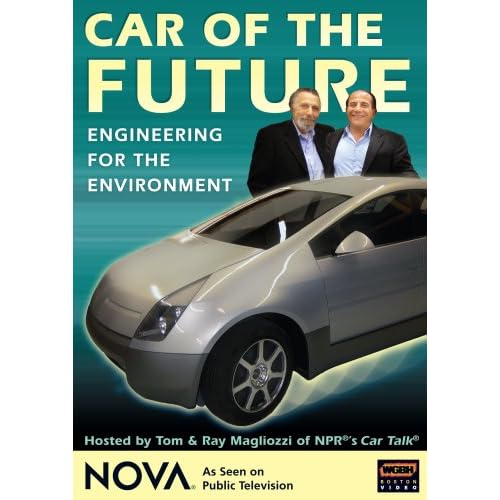
Nova: Car of the Future

Let me mention the worst part of this documentary first: the silliness of brothers Tom and Ray in this program. This program addresses a lot of highly scientific and economic matters that would confuse the average viewer. So they include two DJs on a show called "Car Talk" to lighten the tone. Unfortunately, things are presented as spontaneous which are clearly scripted. Tom and Ray are supposed to be an ideal comic couple like Abbott and Costello or Redman and Method Man, but their presence is just ridiculously extraneous. They present themselves as common men, but they quickly mention that they are MIT alumnae. At one point, one of them has to be bleeped out for cursing. Notice carefully and one of them even makes a fart joke!


Silliness aside, this was a powerful work. We know modern cars are ruining the environment and that petroleum is finite. However, alternatives are often too expensive, dangerous, or unrealistic. They show that Iceland is experimenting with hydrogen-powered transportation, but they have enough energy from geysers to pull that off. Plus, their population is small (and probably not as violent as that of my country, the US). One expert said, "There's not enough land to grow corn and corn is already needed for food." One scientist said, "If we could only produce a living being that works like these two separate microbes do, we'd quicken the process twice." Hello! Horses and eagles are great, but I doubt anyone will make a pegasus to solve our transportation problems!!! Still, I love the way this work gives hope. There are scientists working on solutions. There are consumers willing to pay for pricey cars now which will eventually pay off in the future.

As much as I loved this work, it could have benefited from pointing the blame some. The work does say Americans are driving huge cars, wrongfully, because they make them feel safe. However, the work says nothing on how the steel industry wants car companies to buy their outdated steel, rather than work on developing sleek alternatives. Detroit car companies were told that consumers were sick of inefficient gas guzzlers, but they kept producing the same, old rubbish while Asian companies were addressing consumer concerns. Car companies could legitimately say, "We could change X, but it sure would mean that we'll have to fire thousands of workers." There are villains in this controversy and the documentary says little about them, or oops, maybe us!

John Lithgow narrated this. I love his neighborly, good guy persona. However, I did feel like the main character of "Third Rock from the Sun" was speaking to me. Some like narrators who disappear into the background and that didn't happen here.

I don't know if this work underestimated things or was prescient. It says "We may have competition for gas from China." Well, we DO have that competition. It says, "This problem MAY lead to an economic crisis." Well, we DO have an economic crisis now. The future is today and this documentary seems unaware of it.


Great deal on 'Nova: Car of the Future' by Ray Magliozzi, Magliozzi To... http://bit.ly/cqxyZ6

Monday, August 17, 2009

Green car Futures

More auto makers are embracing green technology. The question is whether there will be enough demand at the right prices to save the global auto industry. And whether it can be done without the industry being on the drip of taxpayer-funded assistance.

Holden this week announced the release of two new fuel efficient V6 engines. Holden chairman and managing director Mark Reuss seemed to suggest it was the way of the future.

Meanwhile, Nissan has unveiled a new battery-powered electric car called the Leaf, seating five adults, with a top speed of about 90 miles per hour (or about 145 km). The car comes with a battery which recharges over eight hours on a power socket. Just plug it in overnight and off you go.

And Ford has decided to focus on building more fuel efficient versions of its Sedan and Territory off-roader. And then of course, there is the industry pioneer, the Toyota Prius, which according to news reports is helping Toyota keep a lid on its losses. Orders for the new Prius are running way ahead of expectations.

There is no doubt green cars sales will boom over the next few years because of pressure to reduce carbon emissions and volatile oil prices. According to this analyst’s report, Toyota and Honda are leading the way but other car makers are queuing up. The report says the industry will have a compound annual growth rate of 20 per cent during 2009-2012.

That said, concerns are being raised about the extensive level of government required to bankroll the production of green cars. The Australian argues that the Rudd Government’s $1.3 billion green car innovation fund will do nothing and is just propping up an industry.

Does the car actually have much of a future in today’s market? People are driving less and they’re certainly not rushing out to buy new cars, green or otherwise, with the latest figures showing that auto sales dropped 10 per cent in July.

Source : www.gmagazine.com.au

Thursday, July 30, 2009

Auto insurance Specialist Suzuki Kizashi unveiled [2]

Built at Suzuki’s brand-new manufacturing facility in Sagara, Japan, the 2010 Kizashi is equipped with a standard 2.4-liter DOHC inline four-cylinder engine offering a more potent standard engine than many competitive best-sellers. The engine employs both an aluminum block and cylinder heads, providing a lightweight installation; aluminum pistons with low tensile force rings deliver improved power and efficiency. Dropped-forged connecting rods, rotating on a forged steel crankshaft, contribute to the inline four’s durability, and a balancer shaft delivers improved engine balance and reduced noise, vibration and harshness (NVH).

The responsive inline four is connected to a six-speed manual transmission, for heightened performance in the low gears, along with relaxed — and economical — cruising capability in the higher gears. Customers may opt for an available Continuously Variable Transmission (CVT) that delivers both the driving experience and fuel efficiency today’s consumers demand free online car insurance quote, while not compromising the character preferred by driving enthusiasts. That character is enhanced with paddle shifters, optimizing driver control regardless of speed or driving environment. With either transmission choice, the Kizashi is engineered to return competitive fuel economy numbers for fuel-conscious consumers.

Monday, May 18, 2009

2010 Chevrolet Camaro

Don't count on the Chevrolet Volt to rescue General Motors. The extended-range electric car is a fascinating science project and great for wowing policy makers, but few car enthusiasts are that committed to saving the planet. What most of us want is a sexy-hot ride that doesn't cost a fortune. Enter the reborn Chevy Camaro - the ultimate red-blooded, blue-collar fashion statement and GM's best hope of driving itself out of the ditch.

The Camaro's six-year absence really did make hearts yearn for a Ford Mustang foil. Dodge's Challenger revival eased some of that ache, but true Chevy fans would sooner pine for the old days than defect. After GM announced that the Camaro concept wasn't a tease, 14,000 believers affirmed their faith by placing orders.

Now that GM's Oshawa, Ontario, assembly plant is cranking out cars, we've test-driven V-6 and V-8 versions of the fifth-generation Camaro. Our first revelation: Chevy has mounted a classic Trojan horse offense. Under its 1969-esque cover, the Camaro is armed with such 2009 weapons as direct injection (V-6 only), an independent rear suspension, and six speeds in every transmission. Chevy's strategy is to reward the faithful and to lure fresh recruits away from imports.

The irony is that true import flavor is part of the Camaro's recipe. Four years ago, Bob Lutz and GM design chief Ed Welburn cooked up this car as a buzz builder and Chevy brand resuscitator. After their 2006 Detroit auto show concept rocked the car world, the business case supporting a production model gained momentum. GM's Holden division in Australia offered two vital resources: a can-do attitude and a global rear-wheel-drive chassis code-named Zeta that arrived here last year beneath the Pontiac G8.

To deliver a Camaro that held true to the Lutz-Welburn inspiration, GM engineers in Michigan and Melbourne hewed a tight coupe out of the large G8 sedan by moving the Zeta rear axle forward six inches. To clear the room needed for twenty-inch wheels and tires, the front suspension was moved forward, track widths were increased, and the windshield was shifted rearward and given a more upright stance. After revised suspension geometries, larger brakes, and other changes were added, the Camaro's Zeta Two underpinnings shared little with the G8's Zeta One blueprints other than common engineering.

Concurrently, the V-8-powered concept was expanded into a full range of meek-to-mean Camaros. The menu includes LS, LT, and SS series with two trim levels, three engines, four transmissions, and two suspensions, plus an RS package consisting of twenty-inch wheels and tires, HID headlamps, and a rear spoiler. Prices run from $22,995 for the stripped LS V-6 to more than $37,000 for a well-equipped SS V-8..

Last year, after driving a Camaro LT powered by the direct-injection 3.6-liter V-6, we concluded that 304 hp serves as an excellent starting point. Now we can report that the six-speed-stick LT squirts to 60 mph in 5.9 seconds - matching Hyundai's hottest Genesis coupe - on its way to a 14.8-second, 98-mph quarter-mile dash. The refined howl under the hood is the entry-level Camaro speaking softly while wielding a decent performance stick, including 17/26 EPA city/highway gas mileage. Equipped with a six-speed automatic, the LS and LT Camaros score an even better 18/29 mpg rating in EPA tests.

The Camaro's cockpit has a bunker vibe inflicted by the high-rise beltline, tall hood, and a roof that curves over your ears. The bucket seats are squishy soft and lacking in both lateral and lumbar support. Releasing one lever allows tilting and telescoping of the dished steering wheel, but a clunky adjuster mechanism takes a bite out of knee room. The uplevel trim is cloth-accented and carefully fitted but not especially luxurious. The few metallic hints are paint or chrome over molded plastic.

Entering the Camaro's rear seats is a chore because of high doorsills and the absence of quick-slide front-bucket releases. There's adequate legroom if front riders are willing to compromise, but curls are sure to be squashed. Rear passengers view the world through tiny triangular portholes.

Access to the 11.3-cubic-foot trunk is through one of the highest, smallest apertures we've ever encountered. A rear-seat pass-through is provided to accommodate poles, pipes, and spears.

The Camaro's instrument panel is a peculiar mix of retro and modern. Square-cornered tach and speedometer dials juxtapose with electronic fuel-level and trip-info displays. Four secondary gauges mounted at the forward end of the console also hark back to 1969; in forty years, nothing has changed to make that location viable. Providing engine and transmission lubricant temperatures is a nice touch, but no driver in the heat of battle is inclined to search for this information.

OnStar is the only form of navigation offered. In compensation, the list of standard or optional infotainment goodies includes CD and MP3 play capability, Bluetooth, a 245-watt sound system with nine speakers, XM reception, an audio input jack, a USB port, and a wireless interface for portable media players.

The best music source is the Camaro SS's 6.2-liter V-8. Rumble and reverb are entertaining at start-up but appropriately subdued underway. The Tremec six-speed manual's shifter is reasonably light to the touch unless you're in street-race mode, when a heavy hand is required to extract peak performance. So hammered, the 426-hp Camaro SS hustles to 60 mph in 4.8 seconds and logs a 13.3-second, 111-mph quarter mile, neatly eclipsing both the Mustang GT and the Challenger SRT8. The thrill peters out at 157 mph when the speed limiter kicks...

Next more ....2010 Chevrolet Camaro

Tuesday, December 16, 2008

Proton Persona CNG E20 ethanol-petrol mix as well as CNG


The Proton Persona CNG was launched earlier this week in Thailand and it will be available in 3 variants - the medium-line auto, medium-line manual and the high-line auto.

Proton are continuing their assault on the Thai market with the Persona CNG. The Persona enters a very very tough segment, with existing models have very commanding positions. We can't go far here without comparisons to the almost bulletproof Vios and the equally solid City, and this is what the Persona faces.

So does it stand a chance? Who is going to buy a Malaysian Proton, ahead of locally assembled and safe options like the Toyota and Honda. Read on to find out....

The Persona is based on the Gen 2 platform, and shares much from the 5-door car's parts bin. The addition of a boot, and some softening of the suspension are the main differences here.

Actually, the Proton Persona CNG is probably not going to shake up the motoring industry in Thailand. Toyota and Honda sales and marketing teams are unlikely to miss any sleep over the addition to the market either. But Proton will sell Persona's in Thailand, and here's why:
CNG

The first major advantage the Persona CNG has over competitors is the CNG tank bolted into the boot. There aren't too many new cars out there with CNG as an option, and the Proton is the first in this segment.

The Campro IAFM engine in the Persona CNG can take either regular petrol, an E20 ethanol-petrol mix as well as CNG (compressed natural gas). CNG is basically the fuel that NGV cars such as taxis use in Malaysia.

Proton targets to sell 500 units a month of the Persona CNG in Thailand. With many Malaysians considering NGV conversions right now, it would be timely to introduce the Persona CNG into the Malaysian market soon.

A car that comes with CNG fueling from the factory would be easier on the owner’s pocket as the cost of conversion is factored into the hire purchase loan, plus it is included in the manufacturer warranty.

Thai prices for the Proton Persona CNG:
Proton Persona CNG 1.6 M-LIne Manual - 549,000 Thai Baht
Proton Persona CNG 1.6 M-LIne Auto - 584,000 Thai Baht
Proton Persona CNG 1.6 H-LIne Auto - 629,000 Thai Baht

Although the price of fuel like Gasohol 91, 95 and E20 have dropped substantially over the past few months, there is still good reason to opt for CNG. The price of CNG has been fixed at just THB 8.50 per Kg, this will equate to lower fuel costs.

The Persona CNG still has a 50 litre fuel tank for the E20 (or Gasohol 91/95) if you get tired queueing with the taxis for CNG, or if you wish to extend your range. At least the option is still there.

Of course it is possible to retro-fit a CNG installation in a City or Vios, but this will add expense and void your warranty. With the Persona you are getting the CNG kit from the start, and it is backed by Proton.
Price

The second major advantage that the Persona has over everything else in the segment is the price. THB 549,000 is a competitive price point. I mean, even if you ignored the fact that this thing included CNG, this would represent decent value. Factor in the CNG kit, and it is starting to look like a bargain.

The Persona CNG comes in 3 specifications the Medium Line with manual transmission at THB 549,000, the Medium Line with 4-speed automatic for THB 584,000 and the top-spec High Line costing THB 629,000.

From here on I'm going to completely ignore the Medium Line cars. They do come equipped with a driver's airbag as standard (come on Honda and Toyota!), but they lack ABS, EBD and seat belt pre-tensioners from the High Line. So assuming that we all care enough about safety to shell out an extra THB 80,000 for these features, let's see how the Proton Persona CNG High Line AT stacks up against the competition.
Engine

The Persona CNG is powered by a 1,597 cc DOHC Campro engine. The engine provides 110 hp which is nothing special. This is on-par with the Vios and Tiida, but is eclipsed by the 1.5 litre Honda unit in the City that produces 120 hp. Still I would say that Proton aren't too far behind here. The engine is a modern unit with multi-point fuel injection, and will no doubt offer enough for the purpose it was designed for. (This is not a racing car guys.)
Safety

Here the Persona CNG is a bit of a surprise. The High Line has two airbags, ABS, EBD and seat belt pre-tensioners. A City with dual airbags will set you back THB 644,000.

I haven't seen any crash test results for this car yet, but the same goes for both Toyota Vios and City.
Quality

Vios and City win. The end. Well... yes and no. While the Proton will have a hard job living with the quality of the competition, there are some nice touches on the Persona that belie its price. Besides, are a few rough edges going to put you off on a car in this price range.
Price

Here is where things get a little more complex. Remember, the Proton has CNG and the others don't. But the Proton is still cheaper to begin with. The Persona CNG is easily the cheapest of the three, and Nissan's Tiida is also a tad higher with dual airbag models starting at around THB 669,000.

However, you might assume that the cheaper price of the Proton Persona suggests that they have cut back on features, but it doesn't seem to be the case. The Persona has 60/40 split folding rear seats as standard, disc brakes all around, rear-parking sensors, steering-wheel audio controls, electric windows (front), electric mirrors, MP3, fog lamps, etc.

So they didn't skimp on equipment.

And the Persona is larger than the City in all dimensions except height. The wheelbase is 50 mm longer, and the car is also wider and longer than the City.


Some FAQs on the Proton Persona CNG:
Is the car’s capacity to store regular petrol affected? No as the CNG tank is an “add on” system to the standard Persona.

Where is the fuel filler for me to refill the CNG? It is located at the engine bay.

How do I switch from CNG to petrol? It is quite easy and straight forward to switch between petrol and CNG by pressing on a button on the instrument panel.

Is there a gauge to see how much CNG I have left? Yes, there are 4 LEDs to indicate CNG level.

How big is the CNG tank? The tank is 90 liters.

Continue reading to see photos of the CNG refueller, the CNG tank in the boot and how much usable boot space is remaining as the CNG tank takes up boot space

Tuesday, September 9, 2008

CERN Take Off LHC

Geneva, 5 September 2008. A report published today in the peer reviewed Journal of Physics G: Nuclear and Particle Physics provides comprehensive evidence that safety fears about the Large Hadron Collider (LHC) are unfounded. The LHC is CERN’s new flagship research facility. As the world’s highest energy particle accelerator, it is poised to provide new insights into the mysteries of our universe.

CERN ประกาศวันเดินเครื่อง LHC แล้ว
มีการร่ำลือวิตกวิจารณ์กันด้วยว่า เครื่องเร่งอนุภาคแฮดรอนขนาดใหญ่ หรือแอลเอชซี (LHC-Large Hadron Collider) จะทำให้เกิดอนุภาคประหลาด ซึ่งจะแปรสภาพโลกให้กลายเป็นมวลสารพิลึกกึกกืออะไรสักอย่าง
แอลเอชซีจะสร้างสภาพที่เลียนแบบการชนกันของอนุภาค ซึ่งเกิดขึ้นอยู่แล้วตามธรรมชาติเมื่อโลกเคลื่อนตัวผ่านรังสีคอสมิกพลังงานสูง นักวิทยาศาสตร์ยืนยันว่า ธรรมชาติได้ทำให้เกิดการชนกันของอะตอมแบบเดียวกับเครื่องแอลเอชซีประมาณ 1 แสนเครื่องอยู่แล้ว แต่โลกก็ยังอยู่ดี ไม่มีการบุบสลายแปรสภาพ รายงานการประเมินนี้เป็นของทีมนักฟิสิกส์ 5 คนที่ควบคุมเครื่องแอลเอชซี ขององค์การวิจัยนิวเคลียร์ยุโรป หรือเซิร์น (CERN) ในกรุงเจนีวา เซิร์นได้ขอให้นักฟิสิกส์ชุดนี้ประเมินความปลอดภัยตามรายงานของนักวิทยาศาสตร์ของเซิร์นเมื่อปี 2546 ซึ่งได้รับรองว่า โครงการนี้มีความปลอดภัย นำไปสู่การเปิดไฟเขียวให้ทำการทดลองได้

แอลเอชซี ซึ่งตั้งอยู่ในอุโมงค์ใต้ดินยาว 27 กิโลเมตร บนพรมแดนฝรั่งเศสกับสวิตเซอร์แลนด์ จะเริ่มปล่อยอนุภาคโปรตอนในวันพุธนี้ เพิ่งเริ่มกระบวนการทดลอง ลำอนุภาค 2 ลำ ซึ่งถูกปล่อยสวนทางกัน จะพุ่งเข้าชนกันในอุโมงค์รูปวงแหวนที่ว่านี้ ด้วยความเร็วเกือบเท่าแสง ตลอดอุโมงค์รูปวงแหวนมีแม่เหล็ก 4 จุด ทำหน้าที่เบี่ยงเบนลำอนุภาค เพื่อให้กลุ่มโปรตอนพุ่งเข้าชนกันในห้องขนาดยักษ์ ซึ่งมีอุปกรณ์ตรวจจับไว้คอยบันทึกผลลัพธ์ ซึ่งจะมีอนุภาคย่อยเกิดขึ้น อนุภาคจิ๋วซึ่งจะเกิดขึ้นและสลายตัวไปในเวลาชั่วเสี้ยวของเสี้ยววินาทีเหล่านี้ จะช่วยไขปริศนาของสิ่งที่ใหญ่ที่สุด นั่นคือจักรวาล และอาจตอบคำถามด้วยว่า "มิติอื่น" ที่อยู่นอกเหนือมิติของเรามีอยู่จริงหรือไม่

รายงานประเมินความปลอดภัยฉบับนี้บอกว่า ถ้ามีหลุมดำเกิดขึ้นก็จะมีขนาดจิ๋ว และสลายตัวไปในทันที เพราะขาดพลังงานที่จะทำให้มันคงอยู่หรือขยายตัวได้ รายงานฉบับนี้ตีพิมพ์ในวารสารฉบับหนึ่งของสถาบันฟิสิกส์ กรุงลอนดอนที่ผ่านมา ฝรั่งเศสได้ขอให้องค์การความปลอดภัยด้านนิวเคลียร์ของฝรั่งเศส ช่วยประเมินความปลอดภัยของเซิร์นด้วย เมื่อ 29 สิงหาคมที่ผ่านมา ศาลสิทธิมนุษยชนยุโรปในเมืองสตราสบูร์ก ประเทศฝรั่งเศส ได้ปฏิเสธคำฟ้องของนักเคลื่อนไหวที่ขอให้หยุดยั้งการทดลองนี้ นักวิทยาศาสตร์กำลังรอลุ้นว่า มนุษย์จะสามารถไขความลับของจักรวาลได้หรือไม่.

Monday, July 7, 2008

Hydrogen Cars

Hydrogen cars are not only the future, they are here, now. When hydrogen cars become the status quo, the U. S. can lessen its dependence upon foreign oil, achieve lower prices at the fuel pumps and cut down on the greenhouse gases that produce global warming. The future of hydrogen cars is not a pipe dream, as there are already many hydrogen cars on the road. California and Japan have many hydrogen cars being used as fleet vehicles now.

Hydrogen-fueled Cars Enhanced with 13 Lucky Enzymes

It seems that, in almost every newspaper or news magazine you pick up these days, you'll find a new energy technology. With billions of dollars invested into finding an alternative to fossil fuels-or more likely, many alternatives-we're caught in the midst of a race to discover a cost-effective system for powering the gigantic transportation industry.

Who knows which technologies will ultimately become as commonplace as gasoline? The question is truly still up in the air...maybe literally, when it comes to hydrogen.

Hydrogen carThe hydrogen economy is often depicted as an ideal futuristic scenario where cars could run indefinitely on the most abundant element in the universe: hydrogen. However, there are still many hurdles to overcome in order to fuel an entire society with hydrogen, mainly because collateral costs (for such needs as production, storage and transportation of hydrogen) are still very high.

One of the latest innovations in hydrogen fuel research is the discovery that 13 enzymes found in nature, when added to water and some kind of starch (biomass material such as wood and plants) break down the water into hydrogen and carbon dioxide. The enzymes are found in such diverse areas as plants, rabbits, bacteria, and yeast.

Hydrogen Fueled


The BMWs Liquid Hydrogen Fueled V12
Here's a first: a liquid hydrogen-fueled V12 engine that can output 230+ hp. This bi-fuel engine - set to go on display at NHA (National Hydrogen Association) 2006 - will be placed in a limited run 7-series model and is capable of burning gasoline or liquid hydrogen.

Honda
In 2005, Honda leased the first commercial hydrogen car to a family in Redondo Beach, California, pictured above.

For the past 28 years, the Los Alamos National Laboratory (LANL) has been conducting research on hydrogen fuel cells for use in transportation, industry and residential use. According to the LANL, "Hydrogen & Fuel Cell Research at Los Alamos has made significant technological advances in Polymer Electrolyte Membrane (PEM) fuel cells, Direct Methanol Fuel Cells (DMFC), and related technologies such as the electrolyzer (a fuel cell in reverse, liberating hydrogen from electricity and pure water)."

Unlike many of the hybrid and "green" cars currently on the market, hydrogen cars offer the promise of zero emission technology, where the only byproduct from the cars is water vapor. Current fossil-fuel burning vehicles emit all sorts of pollutants such as carbon dioxide, carbon monoxide, nitrous oxide, ozone and microscopic particulate matter. Hybrids and other green cars address these issues to a large extent but only hydrogen cars hold the promise of zero emission of pollutants. The Environmental Protection Agency estimates that fossil-fuel automobiles emit 1 ½ billion tons of greenhouse gases into the atmosphere each year and going to hydrogen-based transportation would all but eliminate this.

Not only that, hydrogen cars will lessen the United States' dependence upon foreign oil. The so-called "hydrogen highway" will mean less dependence upon OPEC, the big U. S. oil companies, oil refinery malfunctions and breakdowns and less resistance from oil-selling nations like Venezuela and Saudi Arabia or from hostile nations who would rather sell elsewhere. Consumers will finally get a break from the never-ending rising prices at the gasoline pumps.

President Bush has already allocated approximately $2 billion in hydrogen highway research. California Governor Arnold Schwarzenegger is pushing to get 200 hydrogen filling stations built by 2010 stretching from Vancouver, British Columbia, all the way down to Baja, California. Since Californians buy one-fifth of the nation's cars, the new hydrogen car technology could simply replace the current gasoline engine automobiles in what is called "disruptive technology" where something so innovative comes along it simply replaces the old technology very quickly.

Then again, a more likely scenario is that dual-fuel automotive systems will be developed that can run on either gasoline or hydrogen as the hydrogen infrastructure is being developed. The conversion from gasoline-powered internal combustion engines to hydrogen powered combustion engines is agreed upon by most scientists and engineers to be a particularly easy transition and would buy time for hydrogen fuel cell cars to be fully adapted.

But, hydrogen cars are not isolated to those that burn the fuel in internal combustion engines. There are more hydrogen fuel cell cars being built currently than any other kind. Let's also not forget about hydrogen-on-demand vehicles that are either using a hydrogen compound or electrolyzing water to create hydrogen, avoiding the compressed or liquid hydrogen refueling scenario altogether. And, what about adapting hydrogen peroxide for fuel in car since it is currently being used in racecars and jet packs as a propellant?

Wednesday, July 2, 2008

Boosting Energy Efficiency with Cogeneration


also known as combined heat and power, distributed generation, or recycled energy -- is the simultaneous production of two or more forms of energy from a single fuel source. Cogeneration power plants often operate at 50 to 70 percent higher efficiency rates than single-generation facilities.

In practical terms, what cogeneration usually entails is the use of what would otherwise be wasted heat (such as a manufacturing plant's exhaust) to produce additional energy benefit, such as to provide heat or electricity for the building in which it is operating. Cogeneration is great for the bottom line and also for the environment, as recycling the waste heat saves other pollutant-spewing fossil fuels from being burned.

Most of the thousands of cogeneration plants operating across the United States and Canada are small facilities operated by non-utility companies and by institutions like universities and the military. For small cogeneration plants-those that generate anywhere from one to 20 megawatts of power-biomass or even methane from garbage dumps can be used as a front-end fuel source, but natural gas is far more common as the primary input.

For instance, Sunnyvale, California-based Network Appliance Inc., a computer networking company, relies on a one megawatt natural gas-powered cogeneration system to power the building's extensive air conditioning needs, and for back-up power for use during peak demand times. The company estimates it saves around $300,000 a year in energy costs thanks to the cogeneration system.

In another example, Illinois-based Epcor USA Ventures operates three mid-sized (25 megawatts and up) cogeneration power plants in San Diego to power U.S. Marine Corps and Navy bases there. All three plants work in the same way: Natural gas turbines drive electrical generators that in turn exhaust hot gases. These are then captured to drive a steam generator hooked into the bases centralized heating and cooling systems. Since the systems generate power to spare, Epcor is talking with area companies about kicking in for a share of the steam to keep their energy bills and carbon footprints in check.

Cogeneration is not limited to stationary power plants. Honda is exploring the use of a specialized automotive cogeneration generator designed to improve the overall efficiency of hybrid vehicles by recapturing waste exhaust heat from the internal combustion engine and converting it to electricity to recharge the battery pack. The idea is still in the research and development phase, it could make its way into new cars within a few years, further improving on the already impressive efficiency of hybrid cars.

Content on : cogeneration
Related Posts Plugin for WordPress, Blogger...