Search This Blog

Showing posts with label vehicles. Show all posts

Tuesday, June 14, 2011

Odd car design style


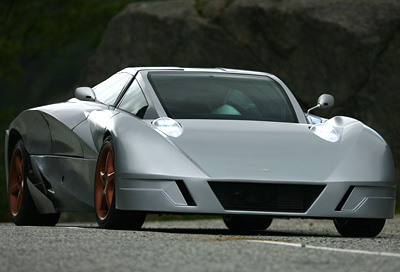
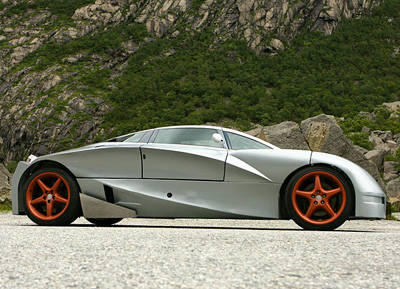
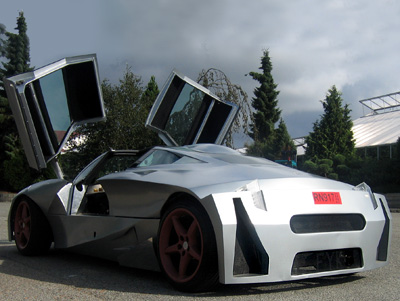
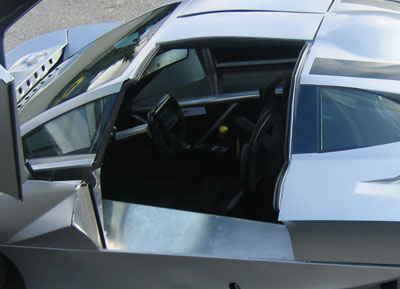
This extremely could be a style plan in planning a automobile that was weird. This appears to be a really odd automobile to mention the smallest amount and that i would have loved to essentially get an image of this from the front read however even while not one like that, it'd be onerous to not decision it the 'Armadillo Car’ for the sheer metal work on its back because it rings a bell in my memory quite slightly of the Armadillo. It conjointly rings a bell in my memory of the 'Holiday Armadillo’ episode of Friends where he dresses himself up in concert for the sake of his son Ben. Despite what quantity i actually like that whole episode this automobile is simply to not my liking. whereas the manufacturers of this automobile are extremely pleased with the total welding work placed on it and that i wouldn't extremely disagree with them on that as there should are lots of painstaking work placed on it, it still doesn't feel an iota sort of a automobile that you just would really need to parade around in. By the appearance of things i'm pretty bound that the front of the automobile would have an enormous metal bird beak on it and even that solely makes it all the additional un-cool. Unless you're craving for a welder who would extremely dish out some horrible wanting vehicles, it's onerous to grasp why anyone would need to place this up as their best work. Not a automobile to essentially die for!

Sunday, May 9, 2010

my first blog

hi all... this is my first blog about automotive things. i try to provide you some useful informations and the great offers to modify your cars and other vehicles. i found some other articles those might useful for your motorcycles and other variant of vehicles. surf this blog freely and get your needs here.

Friday, April 9, 2010

Insurance financing vehicles

* The fraternal insurance is provided on a cooperative basis by fraternal benefit societies or other social organizations.[17]
* No-fault insurance is a type of insurance policy (typically automobile insurance) where insureds are indemnified by their own insurer regardless of fault in the incident.
* Protected Self-Insurance is an alternative risk financing mechanism in which an organization retains the mathematically calculated cost of risk within the organization and transfers the catastrophic risk with specific and aggregate limits to an insurer so the maximum total cost of the program is known. A properly designed and underwritten Protected Self-Insurance Program reduces and stabilizes the cost of insurance and provides valuable risk management information.
* Retrospectively Rated Insurance is a method of establishing a premium on large commercial accounts. The final premium is based on the insured's actual loss experience during the policy term, sometimes subject to a minimum and maximum premium, with the final premium determined by a formula. Under this plan, the current year's premium is based partially (or wholly) on the current year's losses, although the premium adjustments may take months or years beyond the current year's expiration date. The rating formula is guaranteed in the insurance contract. Formula: retrospective premium = converted loss + basic premium × tax multiplier. Numerous variations of this formula have been developed and are in use.
* Formal self insurance is the deliberate decision to pay for otherwise insurable losses out of one's own money. This can be done on a formal basis by establishing a separate fund into which funds are deposited on a periodic basis, or by simply forgoing the purchase of available insurance and paying out-of-pocket. Self insurance is usually used to pay for high-frequency, low-severity losses. Such losses, if covered by conventional insurance, mean having to pay a premium that includes loadings for the company's general expenses, cost of putting the policy on the books, acquisition expenses, premium taxes, and contingencies. While this is true for all insurance, for small, frequent losses the transaction costs may exceed the benefit of volatility reduction that insurance otherwise affords.
* Reinsurance is a type of insurance purchased by insurance companies or self-insured employers to protect against unexpected losses. Financial reinsurance is a form of reinsurance that is primarily used for capital management rather than to transfer insurance risk.
* Social insurance can be many things to many people in many countries. But a summary of its essence is that it is a collection of insurance coverages (including components of life insurance, disability income insurance, unemployment insurance, health insurance, and others), plus retirement savings, that requires participation by all citizens. By forcing everyone in society to be a policyholder and pay premiums, it ensures that everyone can become a claimant when or if he/she needs to. Along the way this inevitably becomes related to other concepts such as the justice system and the welfare state. This is a large, complicated topic that engenders tremendous debate, which can be further studied in the following articles (and others):
o National Insurance
o Social safety net
o Social security
o Social Security debate (United States)
o Social Security (United States)
o Social welfare provision
* Stop-loss insurance provides protection against catastrophic or unpredictable losses. It is purchased by organizations who do not want to assume 100% of the liability for losses arising from the plans. Under a stop-loss policy, the insurance company becomes liable for losses that exceed certain limits called deductibles.

Closed community self-insurance

Some communities prefer to create virtual insurance amongst themselves by other means than contractual risk transfer, which assigns explicit numerical values to risk. A number of religious groups, including the Amish and some Muslim groups, depend on support provided by their communities when disasters strike. The risk presented by any given person is assumed collectively by the community who all bear the cost of rebuilding lost property and supporting people whose needs are suddenly greater after a loss of some kind. In supportive communities where others can be trusted to follow community leaders, this tacit form of insurance can work. In this manner the community can even out the extreme differences in insurability that exist among its members. Some further justification is also provided by invoking the moral hazard of explicit insurance contracts.

In the United Kingdom, The Crown (which, for practical purposes, meant the Civil service) did not insure property such as government buildings. If a government building was damaged, the cost of repair would be met from public funds because, in the long run, this was cheaper than paying insurance premiums. Since many UK government buildings have been sold to property companies, and rented back, this arrangement is now less common and may have disappeared altogether.

Sunday, April 4, 2010

R.L. Polk Says

More vehicles being scrapped than purchased, R.L. Polk says

DETROIT -- More Americans ditched older cars than bought new ones during a 15-month period ending last September, according to a report released this week by R.L. Polk & Co.

Polk found that more than 14.8 million cars and light trucks were scrapped in the U.S., compared with new vehicle registrations of just more than 13.6 million.

The tally, taken between July 1, 2008, and Sept. 30, 2009, includes thousands of cars demolished during last year's cash-for-clunkers program.

Scrapping statistics are viewed in the industry as a bellwether for future gains in vehicle sales. The higher the rate of scrapping, the more likely that the demand for new and used vehicles will rise -- especially if the economy is improving.

This is the first time Polk's analysis covered a 15-month period, in large part to accommodate the clunkers program. Cash for clunkers gave consumers up to $4,500 in rebates on a new vehicle if the trade-in and new purchase met certain requirements. The program ran from July 27 through Aug. 25, 2009, and was funded with $3 billion in taxpayer funds.

Polk did not compile figures from comparable 15-month periods, but the research company said light-vehicle scrap rates have increased in the past five years.

Read more: http://www.autonews.com/apps/pbcs.dll/article?AID=/20100402/RETAIL01/100409972/1400#ixzz0k8WLXOZw


More vehicles being scrapped than purchased, R.L. Polk says

DETROIT -- More Americans ditched older cars than bought new ones during a 15-month period ending last September, according to a report released this week by R.L. Polk & Co.

Polk found that more than 14.8 million cars and light trucks were scrapped in the U.S., compared with new vehicle registrations of just more than 13.6 million.

The tally, taken between July 1, 2008, and Sept. 30, 2009, includes thousands of cars demolished during last year's cash-for-clunkers program.

Scrapping statistics are viewed in the industry as a bellwether for future gains in vehicle sales. The higher the rate of scrapping, the more likely that the demand for new and used vehicles will rise -- especially if the economy is improving.

This is the first time Polk's analysis covered a 15-month period, in large part to accommodate the clunkers program. Cash for clunkers gave consumers up to $4,500 in rebates on a new vehicle if the trade-in and new purchase met certain requirements. The program ran from July 27 through Aug. 25, 2009, and was funded with $3 billion in taxpayer funds.

Polk did not compile figures from comparable 15-month periods, but the research company said light-vehicle scrap rates have increased in the past five years.

Higher scrap rates

As of October 2009, the scrap rate was 6.1 percent of the total U.S. light-vehicle fleet, compared with 4.3 percent in July 2005.

Polk, which tracks the ability of automakers to retain customers, expects current trends for scrappage and vehicle ownership to continue for at least another year. The assessment assumes a general upward trend for vehicle scrappage rates as high volumes of older vehicles continue to retire from the U.S. fleet, according to the report.

The average age for all light vehicles during the 15-month period is 10.2 years, a trend supported by Polk's research that consumers are keeping cars and trucks longer. As of September 2009, the average length of ownership for a new or used vehicle was 49.9 months, up from 45 months at the same point a year earlier.

The economy, limited financing and leasing options, extended warranty offers and improved vehicle quality support the longevity trend, according to Polk. The company said this could provide increased business for various segments of the industry.

“As vehicles age and consumers continue to hold onto them longer, there are significant opportunities for repair services and parts demand for the aftermarket as vehicles are falling out of warranty as they age,” Mark Seng, Polk vice president of sales and client services, said in a statement.

Monday, March 1, 2010

Concept Car : Renault Peugeot Citroen C Zero 2010

A concept already seen! look as Mitsubishi i-MiEV. Citroen has just adapted the car to house style, as Peugeot with the ion.


PSA (Peugeot-Citroen), the politics of electric vehicles is to partner with specialists. Thus, after the Berlingo First Electric, developed with Venturi Automobiles, the Group has approached Mitsubishi Motors Corporation, to develop the C-Zero. This strategy shows some caution on the part of PSA, in contrast to gamble in terms of investment, offers an electric Renault. The group prefers the hybrid, less revolutionary. Question of culture!


Technically, the C-ZERO has a synchronous motor with permanent magnet delivers 47 kilowatts (64ch) between 3000 and 6000 rpm. The maximum torque of 180 Nm is constant from 0 to 2000 rpm. The fall of torque from 2000 rpm is needed is the technical defluxing, familiar to electricians. The motor power is provided by batteries last generation of Lithium-ion implanted in the center of the vehicle in the floor. The stored energy is 16kWh issued a voltage of 330V.


Performance side, there is only one number to remember: 130. The car can travel 130 km on a single charge and maximum speed reaches 130 km / h. A city with a capacity of peri-urban. Know that in France, 70% of car trips daily on weekdays, are less than 30 km, for an overall average of 40 km.


As the ion Peugeot, the C-Zero will be marketed in 2010 and will be eligible for bonuses Government 5 000 €. Why miss out?

Thursday, January 28, 2010

Concept car : Hurst Silver and Black Series 4 Challenger 2010

Hurst Performance Vehicles unveiled the first-ever Series 4 Supercharged 2010 Hurst/Hemi Challenger, dressed in the signature silver and black Hurst colors at the “Back to the Bricks” celebration in Flint, Mich
The numbered silver and black Challengers come equipped with a wild red anodized HARD-DRIVE® pistol grip Hurst shifter and 20″ one-piece polished aluminum Hurst forged wheels, featuring graphite gray painted spoke insets and red and black Hurst logo wheel centers. Hurst collaborated with Katzkin on the car’s black leather interior, which features perforated red inserts, red top-stitching and logos. Each Challenger contains traditional Hurst red and black logos in the dash badge, grille badge, wheel centers, fender graphics and the embroidered floor mats.
The Performance Series cars are a limited numbered series. Each comes with a sequentially numbered dash badge and its own Certificate of Authenticity. These cars all feature Hurst’s own AIR-SPEED® rear deck spoiler painted in body colors, Hurst/Eibach suspension, shocks and sway bars, Hurst/Magnaflow polished stainless steel cat-back exhaust, BF Goodrich KDW Performance Tires, Hurst/Katzkin leather interior, embroidered logo floor mats, a custom car cover and K&N Air Filters. Hurst cars feature painted stripes and graphics under clear, not stickers. SERIES 3 through 5 feature HURST/Vortech superchargers.


The HURST/Hemi®-Challenger is available in five performance stages. Series 2 vehicles are available through participating Dodge dealers nationwide, while Series 3, 4 and 5 vehicles are only available from Hurst Performance Vehicles and can be ordered via the company’s website at www.hurst-performance.com


Sunday, September 13, 2009

Concept Car :Chevy Volt 2010


Genius in theory. In reality? We might know by 2010.

For decades, American automakers, Washington politicos, oil companies and consumers alike have been caught up in the lure of cheap gasoline. It’s led to fuel inefficient vehicles, lax legislation, and even more lax energy innovation. But in the end, the root of all these behaviors comes back to the American consumer. The American consumer has always wanted and purchased gasoline-powered products, so that’s what the market delivers. But like repeatedly putting one’s hand on a burning stove, at what point do American consumers conclude the financial pain at the pump has gotten too great? And when do their automobile choices start changing the behavior of automakers, politicians and oil companies? The Hybrid craze is the first step in this new direction. Although Hybrids get a lot of well-deserved grief from some industry experts, there is one undeniable merit to them - Hybrid popularity is producing more alternatively-powered choices for American consumers.

full story

Sunday, March 22, 2009

Concept Car: Aetek FYK

Make Aetek
Model FYK
Concept year 2006
Production year -
Engine natural/hydrogen gas

The FYK concept car was developed by Norwegian company Aetek, in conjunction with and sponsored by Statoil. The FYK was designed to highlight natural and hydrogen gas powered environmentally friendly vehicles.

Statoil provide the fuel for the FYK concept car. They see the natural and hydrogen gas mixture called NaturalHy (HCNG) which consists of 8-20% hydrogen, 92-80% compressed natural gas to be a commercially viable step towards a future potential all-hydrogen market.

The FYK concept car is built almost entirely from recyclable aluminium including body, chassis, wheels, engine and even interior elements. Exterior and interior design of the FYK concept show different aluminium shaping techniques and surface treatments.


Related Posts Plugin for WordPress, Blogger...