Search This Blog

Showing posts with label Lotus Cars. Show all posts

Monday, April 11, 2011

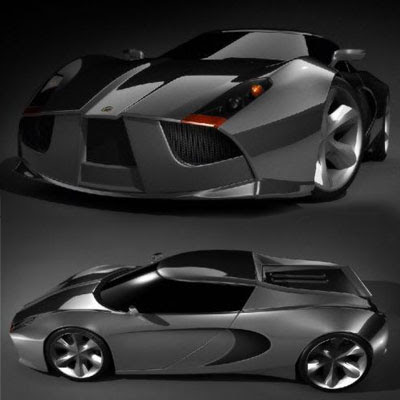
Lotus SUV


Lotus SUV

When people pictured the future in the '80s and '90s, they imagined flying cars and nuclear-powered vehicles. Well in 2010, the cars aren't going to fly and won't run on nuclear power, but they will be quiet. The electric car has finally arrived in 2010, and the car companies that embrace it will be wildly successful. Although the Toyota Prius is now the king of electric cars, getting 50 miles per gallon, the Prius is just a hybrid and was the first step to get the public ready for an all electric car.

Tesla leads the way in cutting edge electric car technology.
Tesla is on the cutting edge of electric car production and developed a sports car named the Tesla Roadster. Although the price is a prohibitive at $109,000, the Tesla Roadster has a national spokesman and supporter in late night talk show host David Letterman. Letterman was one of the first owners of the Tesla Roadster and isn't shy about heaping praise on the car and the Tesla company. The Tesla Roadster gets 240 miles per charge and doesn't lack in the performance department either.

The Tesla Roadster does not have an internal combustion engine and produces no emissions. The Tesla Roadster has a lithium ion battery and can be charged with electricity in the driver's home. There is also an optional Mobile Connector which allows you to charge from any available 110v or 220v electrical outlet. One issue that will be addressed in the near future is getting more and more local fast food restaurants and grocery stores to feature recharging stations for electric vehicles.

The Tesla Roadster is a sleek looking sports car that features style as well as a sports car feel. To see the car on the street the average person would never know the car is electric. The Tesla Roadster is designed off of the Lotus Elise sports car view the Tesla Roadster here. The vehicle can accelerate from 0-60 MPH in 3.7 seconds.

Tesla Model S will be the most affordable and most popular electric car of 2010.
The Tesla Model S will break the mold of the small cramped electric car. The Tesla Model S will have a range of 300 miles per charge and will feature a quick charge battery, that can be charged in 45 minutes. From a performance stand point the Tesla Model S can accelerate from 0-60 MPH in 5.6 seconds.

The Tesla S will also feature a comfortable interior that can seat up to seven passengers and an "infotainment system." The car also will have a large cargo space and will break the mold of the electric cars golf cart image.
Selling for between $55,000 and $60,000, the Tesla Model S will be the first large scale production electric car ever. By the end of 2010 they could be a common site around major cities across the country. When purchasing an electric car, like the Tesla, consumers will receive a $7500 tax credit which is not figured into the price.

Nissan Leaf is behind the curve as far as electric technology goes.
The Nissan Leaf is not going to make many waves in the electric car market in 2010. A little effort is better than no effort and this is a car designed with little thought towards the future. The Nissan Leaf will get 100 miles per charge and is larger than the old standard electric cars. the car will seat five passengers but the main problem that is hard to ignore is the range of the vehicle. 100 miles per charge will get monotonous and is already out dated before it hits the market.

The Leaf accelerates like a V-6 powered vehicle and is capable of speeds up to 90 MPH. Although Nissan has not put a price tag on the Leaf they are saying that the car will be priced like a normal family sedan. It is a first step in the process of electric cars and Nissan is at least getting in the game. If they are smart they are developing a new electric that performs in the 300 mile range.

E Mini Cooper by BMW gets mini performance at 150 miles per charge.
The E Mini Cooper is identical to it's gas breathing brother only it is 100% electric. Consumers that love the Mini Cooper will no doubt love this car. The car comes available with a price tag estimated to be $35,000 and will have a "quick charge" of three hours.

As a performer the E Mini Cooper has the capability of reaching 95 miles per hour, and can do 0-60 in 8.4seconds. The car will be a two seater as the battery pack will be in the back seat. From a comfort stand point the E Mini Cooper is as uncomfortable as it's gas powered brother. It is a nice first attempt by BMW and maybe we will see an SUV in the near future using the same technology.

Ford Focus BEV, Ford's electric effort stars on the Jay Leno Show.
The Ford Focus BEV is an electric version of the focus and is already a star even though it hasn't officially hit the streets yet. The now ill fated Jay Leno show was featuring the Ford Focus Electric car on it's track outside it's studios. A host of celebrities took turns, driving around a closed course as a comedy bit for the show titled "The Green Car Challenge."

The Ford Focus BEV version will feature a 141 horsepower engine but does not disclose how long the vehicle will hold a charge or whether the vehicle have a quick charge option. To view the Ford press release on the Focus Electric car, click here.

One thing is definite for 2010, the electric car can become a major seller, if it is marketed right and the American public can get from point A to Point B without many issues. The next issue will be to ween the American public off of their dependence of foreign oil. The electricity generated for the new electric cars will need to be generated by solar and wind aided electricity. One step at a time though, the first step in 2010 with the impending full scale production of electric cars is exciting.

Thursday, November 18, 2010

Used Classic Lotus Cars models Lotus Mark IV (1952) Parts 1

Used Classic Lotus Cars models Lotus Mark IV (1952) Parts 1


Classic Lotus Cars models Lotus Mark IV (1952)
Picture Of

Classic Lotus Cars

Classic Lotus Cars MK 4

Lotus Cars Mark IV Parts 1

Lotus Mark IV was a trials car by Colin Chapman built on a Austin 7 chassis. Colin Chapman’s success at building trials Lotus cars brought another previous customer, Mike Lawson, to order a second trials car in 1952 to replace his Lotus Mark II, in which he won the Wrotham Cup. Once again Colin Chapman chose an Austin Seven as the starting point, reinforcing the frame and installing a four-cylinder 1172cc (71.5ci) Ford sidevalve engine. Colin Chapman used all the tricks he had learned in his previous cars, constructing a lightweight aluminum body with a rounded nosecone. He fitted a 3-speed transmission taken from a Ford 8 and the divided front axle as on his previous cars.


Classic Lotus Cars models Lotus Mark IV (1952)
Picture Of

Classic Lotus Cars


Mike Lawson won his class in the very first attempt in this car, following up with others, solidifying Colin Chapman’s reputation as a designer and engineer. The success of this car, and other requests for more cars, led Chapman and Michael Allen to establish Lotus Engineering in a disused stable in Hornsey.


Classic Lotus Cars models Lotus Mark IV (1952)
Picture Of

Classic Lotus Cars


Ford Sidevalve Motor
Configuration: S4 SV
Displacement: 1172 cc
Bore/Stroke: 63.5mm x 92.456mm (2.5x3.64")


Tuesday, November 16, 2010

Used Classic Lotus Cars models Lotus Mark III (1951) Parts 1

Used Classic Lotus Cars models Lotus Mark III (1951) Parts 1


Classic Lotus Cars
Picture Of

Classic Lotus Cars

Classic Lotus Cars MK 3

Lotus Mark III Parts 1

Classic Lotus Cars Mark III was a single-seat sports car from Colin Chapman as a 750 racer built.

In 1951, Colin Chapman began to focus on a car for the road, rather than processes, in the formula 750 Motorcycle Club, who compete the Austin 7 Cars as the base. To comply with the rules, Colin Chapman was among the seven chassis, engine, transmission and rearend, with the help of Nigel and Michael Allen, they changed the boundaries of the rules hold. Colin Chapman boxed the rails and has 14-gauge cross tubes torsional rigidity. An elegant aluminum two-seater body, which weighed only 65 kg. (29.5 kg) was added to reduce drag, and the engine was very coordinated. The car, for all his apparent delicacy, proved to be a surprisingly faster than the competition. It led to a request for copies (better B Mark III was built for Adam Currie, for example) and a copy of the previous Mark I. It was clear by the end of the season, the Lotus Cars Mark III was the best car in the Formula 750 in the country.

Classic Lotus Cars
Picture Of

Classic Lotus Cars


At this time, Colin Chapman was still working full time at the British Aluminium, and create car at night, and they ran, with the help of enthusiastic volunteers, over the weekend, but it was clear from the performance of the Lotus Cars Mark III and the demand is not there here's a chance. Following on the success of this year, 1st January 1952 Colin Chapman founded Lotus Engineering Company, to Michael Allen was the first commercial partner of Colin Chapman. They set up shop in a former stable in Hornsey.


Thursday, July 29, 2010

Lotus Exige Cup 260 (2008)

Lotus Exige Cup 260 (2008)
The Lutus Exige Cup 260, once again represents Lotus' most radical version of the Exige, with the track environment being its home and for 2008.A direct development of the 2007 Exige Cup Car, this year's car has a revised engine management system to take the maximum power output to 257 hp (260 PS), up by nearly 5 hp (5 PS) over last year.The Lotus Sport Exige Cup 260 is one of the quickest cars around a circuit. Key to this incredible performance is the aerodynamic package, which produces over 40 kg of downforce at 160 kmh increasing grip and stability at higher speeds. With a top speed of 247 kmh (147 mph) and a zero to 160 kmh (100 mph) in circa 9.9 seconds, 0 to 100 kmh in circa 4.1 seconds (0 to 60 mph in circa 4 seconds), the MY2008 Exige Cup 260 is the perfect partner for the serious racer. Combined Fuel Consumption is 9.1 l/100km and the CO2 emissions 216 g/km.

Sunday, July 4, 2010

Lotus Exige Scura

Lotus Exige Scura


This is the limited edition Lotus Exige Scura, also known as the “Stealth Edition” in Japan , that will soon go on sale in the UK . Shown at the Tokyo Motor Show, the Scura is a modified Exige S, with 260bhp squeezed from its supercharged engine due to a revised ECU.

The Exige S in standard form has 220bhp while the performance pack offers 240bhp. Listed as standard on the track day special are the following: launch control, Ohlins 2-way adjustable dampers, and variable slip traction control. You may be wondering about the “Stealth” name. Special matt “Phantom Black” paint gives the Stealth its name. The weight is reduced by 10kg because carbonfiber was used on some components including sports seats, centre consol, oil cooler inlet valves and front splitter. High gloss “Phantom Black” triple stripes run the length of the car. The Scura will reach 60mph in 4sec, 100mph in 9.9sec and a top speed of 152mph. If buyers order books immediately after this week’s Tokyo motor show, the car will be priced £45,000 in the UK .

Tuesday, June 22, 2010

Lotus 2 Eleven

Lotus 2 Eleven


The Lotus 2-Eleven  weighing in at just 670 kg (1,477 lbs) with 255 PS (252 bhp / 188 kw) on tap courtesy of its supercharged and intercooler 1796 cc engine, the Lotus 2-Eleven boasts a power to weight ratio similar to that of a 1960’s Formula One car.  The Launch Edition is available in two versions - Road Going Version (UK Single Vehicle Approval) fitted with front and rear lights, exhaust catalyst, single plane rear wing and other items to achieve compliance with UK road legal requirements and Track Only Version with an enhanced aerodynamics package including high downforce single plane carbon fibre rear wing, high downforce front splitter, brake lights and rear indicators and FIA approved driver’s race seat. The supercharged and intercooled 1796 cc engine in the Lotus 2-Eleven has a maximum power output of 255 PS (252 bhp / 188 kw) at 8000 rpm and a torque figure of approximately 242 Nm (179 lb/ft) at 7000 rpm. There is a smooth and linear surge of power from low engine speeds all the way to the maximum 8000 rpm. The Lotus 2 Eleven features all new ultra-lightweight (40 kg / 88 lbs) composite bodywork featuring core-mat technology. All external panels are bolted on for ease of removal, maintenance and repair. Fully independent suspension utilising unequal length 2-way adjustable dampers with coil over springs and Lotus Sport adjustable front anti-roll bar.

Sunday, June 20, 2010

Lotus Elise R

Lotus Elise R


The Lotus Elise is a two seat, rear-wheel drive, mid-engined roadster  conceived in early 1994 and released in September 1996 by the English manufacturer Lotus Cars.The roadster is capable of speeds up to 240 km/h (150 mph).  The Elise was named after Elisa, the granddaughter of Romano Artioli who was chairman of Lotus at the time of the car's launch.Two more track-focused models, the 135R and Sport 190 were available with 135 bhp (101 kW; 137 PS) and 192 bhp (143 kW; 195 PS) respectively. These also came with associated handling upgrades such as Lotus Sport Suspension and wider wheels with Yokohama Advan A048 tyres. In certain markets, the 135R was replaced by the "Sport 111", which was similar, apart from sporting the 156 bhp (116 kW; 158 PS) VVC engine in place of the 135 bhp (101 kW; 137 PS) tuned K-series.

Lotus Evora

Lotus Evora


The  2010 Lotus Evora engine is again sourced from Toyota  - this time the Camry's 3.5-liter V-6. In the hands of Lotus engineers, it makes 276 hp and 252 lb-ft of torque. A six-speed manual is standard, but an automatic eventually will be added. Lotus  Evora claims this heretofore humble engine will propel its new GT to 160 mph and provide a five-second 0-to-60-mph sprint. Although the Lotus  Evora follows recent Lotus practice by using an aluminum-spaceframe structure and a mid-mounted engine, the car is much larger, more luxurious, and more livable than any of the current models.

Tuesday, May 25, 2010

Lotus Cars History

The company was formed as Lotus Engineering Ltd. by engineer Colin Chapman, a graduate of University College, London, in 1952. The first factory was in old stables behind the Railway Hotel in Hornsey, North London. Team Lotus, which was split off from Lotus Engineering in 1954, was active and competitive in Formula One racing from 1958 to 1994.


Lotus Cars
Lotus Cars

Lotus Cars
Lotus Cars

Lotus Cars
Lotus Cars


The Lotus Group of Companies was formed in 1959. This was made up of Lotus Cars Limited and Lotus Components Limited which focused on road cars and customer competition car production respectively. Lotus Components Limited became Lotus Racing Limited in 1971 but the newly renamed entity ceased operation in the same year.

Lotus Cars
Lotus Cars

Lotus Cars
Lotus Cars

Lotus Cars
Lotus Cars


Lotus Cars
Lotus Cars

Lotus Cars


Lotus Cars
Lotus Cars

Lotus Cars
Lotus Cars

Lotus Cars
Lotus Cars

Lotus Cars
Lotus Cars

Lotus Cars
Lotus Cars

Lotus Cars
Lotus Cars


All Review videos and more of:• Infiniti• Mitsubishi• Aston Martin• Isuzu• Nissan• Audi• Jaguar • Pontiac• Bentley• Jeep• Porsche• BMW• Kia• Rolls Royce• Buick• Lamborghini• Saab• Cadillac• Land Rover• Saturn• Chevrolet• Lexus• Scion• Chrysler• Lincoln• Smart• Dodge• Lotus• Subaru• Ferrari• Maserati• Suzuki• Ford• Maybach• Tesla• GMC• Mazda• Toyota• Honda• Mercedes-Benz• Volkswagen• HUMMER• Mercury• Volvo• Hyundai• MINI.and MORE....

Wednesday, December 30, 2009

2010 Lotus Europa car Wallpaper and pictures


2010 Lotus Europa Photo


Lotus Europa i6 2010


2010 Lotus Europa Concept Design


2010 Lotus Europa Concept design
Related Posts Plugin for WordPress, Blogger...