Search This Blog

Showing posts with label Used Car. Show all posts

Tuesday, August 24, 2010

2011 Nissan Navara : Geneva Motor Show

0


Europe’s best selling pick-up and its SUV sibling since its launch – the 2010 Nissan Navara have been given a mid-term boost with a number of significant enhancements designed to keep them at the top.


Among the changes are the arrival of a new and technically advanced 3.0-litre V6 diesel engine; important improvements to the popular 2.5-litre dCi diesel; greater levels of passive safety; new equipment including the availability of a state-of-the-art Nissan Connect Premium touch-screen satellite navigation system, a premium Bose sound system and a rear view camera; enhanced interior quality and a number of styling changes to keep Navara and Pathfinder looking sharp.


Launched at the Geneva Motor Show, the improved new-look Nissan Navara models are due on sale across Europe in April 2010. They will be followed two months later by the new 3.0-litre V6 diesel flagship models.


The new direct injection V6 turbodiesel has been developed by the Renault Nissan Alliance to deliver high levels of performance with strong economy, competitive emissions and class-leading refinement.


The key element of the new V6 – with an unusual vee angle of 65 degrees – is the material chosen for the engine block. Alliance development engineers chose Compacted Graphite Iron (CGI), a material that offers all the benefits of cast iron, including high levels of stiffness and noise absorption, without the weight penalty. And while CGI is heavier than a pure alloy block there is no need to add stiffening ribs or extra sound deadening material so the weight gain is comparatively modest.


Using experience gained during the development of the Alliance 2.0-litre dCi engine – and carrying over some technology – accelerated development of the new V6, but number of significant changes have been made to the hardware for the V9X. The combustion chamber design, for example, has been optimised to improve the balance between emission levels and fuel efficiency.


The compression ratio has been lowered to 16:1 to benefit not just economy and emissions but also noise, vibration and harshness (NVH), while internal engine friction is reduced by the use of ultra smooth components such as the micro-finished forged steel used for the crankshaft.

2010 Jaguar XJ - Jaguar Cars

2010 Jaguar XJ 1


Jaguar XJ is not only enhanced in terms of design, technology and performance it is also the most environmentally responsible model as well! Recently Britain’s VCA (Vehicle Certification Agency) audited and approved t imhe new XJ’spact on environment over a specified lifetime (200,000km), including the materials used, material processing, assembly and transport during manufacturing. Jaguar is now recognized as a manufacturer with great efforts to reduce its carbon footprint.


Paul Markwick, VCA CEO, said,. “I’m delighted to present this certificate to the team at Jaguar; I know it marks the culmination of a lrot of had work. Environmental issues are rightly high on the business agenda so it is great to see industry embracing initiatives such as Life Cycle Assessment, This demonstrates a clear commitment to the management of environmental impacts at all stages of the product life cycle, from concept through to the end of vehicle life. VCA has supported the automotive industry with its certification needs globallyan 3 for more th0 years and this extensive knowledge of the sector means that our audit teams understand the complexities of the vehicle design and construction process and the legislation supporting this”.


A key focus for future development will be the unique lightweight aluminium vehicle architecture which lies at the heart of the latest Jaguar XJ.


Based on aerospace technology, the aluminium body structure offers a number of major advantages compared to a conventional steel shell, including a substantial cut in the energy required for manufacturing and a significant reduction in weight.


The aluminium body in the new XJ uses up to 50 percent recycled material, with a plan to increase this to 75 percent. Body panels made from recycled material use only five percent of the energy required for new aluminium, equating to a potential saving of three tonnes of CO2 per vehicle compared to a bodyshell made from new aluminium.


The XJ’s aluminium structure also saves around 150kg compared to an equivalent steel body, allowing the use of smaller, more fuel efficient engines with no compromise to performance. Equipped with the 3.0-litre AJ-V6D turbodiesel, the XJ delivers an impressive combined economy figure of 40.1mpg and CO2 emissions of 184g/km.


“Jaguar has been at the forefront of developing lightweight aluminium bodies for the past decade, and the lifecycle assessment will help us find new opportunities to enhance their environmental benefits,” says Mark White, Chief Technical Specialist Body Engineering.


“With a holistic approach, which takes account of the energy required during manufacturing, the advantages of an aluminium structure are particularly compelling. Compared to a typical steel-bodied competitor, we estimate that the new Jaguar XJ can cut CO2 emissions by six tonnes per vehicle over the whole lifecycle.

Sunday, August 15, 2010

MINI Cooper Graphite

MINI Cooper Graphite 1
MINI Cooper Graphite is equipped with 15-inch Rotator Spoke alloy wheels, and it comes with a Dark Silver metallic paint, a piano black interior, white indicator lenses, and also black bonnet stripes.Special edition models have been hugely successful since the launch of the new MINI in July 2001. In recent years, editions carrying the monikers Checkmate, Park Lane and MINI One Se7en have set MINI owners apart from the pack and are highly sought after in the used car market. These editions have been instrumental in maintaining high MINI residual values and industry expert Glass’s has confirmed that the MINI One Graphite will command a three per cent higher residual value than the standard MINI One.

Wednesday, August 4, 2010

BMW Concept X9

BMW Concept X9 1
The BMW X9 is designed by Khalfi Oussama is a 18-year-old designer from Tunisia. This concept car design X9 has very futuristic and very aggressive color sense. It could be a proposal for a new Batmobile.

BMW has seen some rather odd looking cars roll off the production line over the past 10 years, but Khalfi Oussama’s new X9 off roader concept coupe takes oddball beemers to a whole new level. The X9’s massive wheels and excessively wide (not to mention oddly patterned) tyres combined with its color matched side-steps and heavy-duty crash plates front and rear definitely showcase the car’s intentions. At first glance, this concept car BMW X9 seems more suited to Hollywood than the actual driving in the streets. This will be used on any type of a car engine, is currently no detailed information, but because everything is the result of imagination, so anything is possible. As we know, attractive design and powerful engines rely on each other, but both a model of success in both play an important role.

Strange about the design of rich people sometimes go far beyond the imagination of car makers imagination, which launched in recent weeks from so many works on the concept car design is evident. This BMW concept car designed for 18-year-old X9 designer seems a lot of experience in automotive design, as he had also drawn up before several other models, futuristic design sketches, including BMW and Ferrari models.

The BMW X9 Concept blends the sporty bodylines of a coupe with the rolling stock of an off roader much like BMW’s chunky yet sporty looking X6 soft roader. The BMW X9 coupe also carries a new interpretation of BMW’s signature kidney grille, although Oussama’s version is considerably smaller than the current flock of BMWs. The grille sits alongside a set of unique twin-headlights, as well as a pair of tiny foglights that are set into the bumper.

Friday, July 23, 2010

Bentley Continental Supersports Convertible 2011

Bentley Continental Supersports Convertible 2011
The Continental Supersports Convertible further strengthens Bentley’s supercar range, following the introduction of the Continental Supersports Coupé in 2009. The new Supersports Convertible, with the same 630PS (621bhp/463kW) twin-turbocharged W12 engine, is the fastest, most potent drop‑top Bentley has ever built, offering the ultimate Bentley driving experience in the world’s most dramatic convertible. The inspiration for the ‘Supersports’ name is the 1925 Bentley Supersports, a race-bred version of the iconic Bentley 3-litre, that delivered 85bhp when more ordinary cars were equipped with a modest 15bhp. It was also the first production car to reach 100mph extreme performance in its day. The new, muscular four-seat Supersports Convertible is unmistakably Bentley in its design and craftsmanship but its interiorsignifies a dramatic re-interpretation of Bentley luxury. Satin-finished carbon fibre,Alcantara™and ‘Soft Grip’ leather create a unique ambience with a distinctly sporting and contemporary style. All models in the Continental model range, including the new Supersports Convertible are now capable of running on both petrol (gasoline) and E85 bioethanol or any combination of the two, reaffirming Bentley’s ongoing commitment to make all its cars bio-fuel compatible by 2012. Pioneered by the Supersports Coupe, this FlexFuel technology offers a reduction of up to 70 per cent in CO2 emissions on a ‘well-to-wheel’ basis, a measure of a fuel’s net contribution to the atmosphere, not just tailpipe emissions.

With 630PS (621bhp) and 800Nm (590lb ft) of torque from its pioneering FlexFuel engine and new ‘Quickshift’ transmission, the Supersports Convertible is the fastest drop-top Bentley has ever built. It accelerates from 0-60mph in 3.9 seconds (0-100km/h in 4.2 seconds) and, conditions permitting, can continue onto a top speed of 202mph (325km/h).

Positive torque during downshifts is achieved through engine and gearbox electronic controller interaction for extra throttle and fuel injection during the overrun. During transmission upshifts, fuel and ignition are cut momentarily to give faster mechanical shift times through torque reduction, also improving shift quality and durability. The 9.5Jx20-inch forged alloy wheels, shared with the Supersports Coupé, offer a weight saving of 10kg (22lb) per car, reducing unsprung and rotating mass while the open 10-spoke design offers superior brake cooling. The rear wheels have a 25mm (1 inch) greater offset resulting in a 50mm (2 inches) increase in the rear track, further benefiting handling and stability. The lightweight wheels are fitted with 275/35 ZR 20 Pirelli Ultra-High Performance tyres, providing excellent steering response. The standard-fit tyre monitoring system allows the driver to select tyres type and speed range parameters. As well as monitoring pressures, the system warns drivers if their speed is too high for the tyre pressures or if tyre speed ratings are exceeded on winter tyres. Carbon ceramic brakes are standard fitment and provide a reduction in rotating and unsprung mass of 20kg (44lb) from the front axle,  benefiting steering response, grip and ride comfort. The large diameter (420mm front, 356mm rear) lightweight discs and eight-piston calipers offer fade-resistant braking performance with minimal disc distortion under high thermal conditions.

Pedal feel is also improved with shorter travel, high effectiveness and a precise pressure point. Six new colours are added to the Bentley colour palette (Citric, White Satin, Kingfisher, Magenta, Orange Flame and St James Red Pearl) and the Dark Grey Metallic Hood that is available on the new Supersports Convertible is also available on the Continental GTC models. Traditional Bentley features such as seat piping and stitching options can be applied to the rich leather hides that are used to trim the cabins of every Continental. These include highly intricate fine line, cross and Z-stitching to decorate the seats, door panels and front console. A new Premium Pack for the four-door Flying Spur is available as a cost option and includes beautiful veneered picnic tables with vanity mirrors, a Mulliner ‘jewelled’ alloy fuel filler cap and chrome inlay strips to the door waistrails. Customers can also choose from lambswool rugs or deep pile carpet mats with leather hide binding to the edges.

Bentley Continental Series 51 Range

Bentley Continental Series 51 Range
The Series 51 Continental models represent Bentley exterior and interior styling at its most vibrant and will enable customers to order ‘off the peg' from an exclusive range created by Dirk van Braeckel's renowned team of Crewe-based designers.

 Every Series 51  car will feature a highly-distinctive interior colour palette and unique exterior design cues.Bentley's Colour and Trim team, managed by Melinda - June Jenkins, have designed some bespoke three-tone interiors which demonstrate the full potential of leather hide colours and showcase the creative application of contrast stitching and piping. The first example of their work will be the Continental GTC displayed at Frankfurt which features Imperial Blue as a main and secondary hide, Linen seat and door inserts and Newmarket Tan as the accent colour.Series 51 cars will also feature several unique interior details including the use of non-indented hide for diamond quilting, contrast piping for the seats and doors as well as bespoke Series 51 treadplates.

Bentley's designers have selected a range of premium-quality materials for the dashboard and centre console to complement the three-tone interiors. The Dark and Bright ‘Engine Spin' aluminium options provide a striking contrast with darker and lighter hide colour choices and a special, limited-edition Amboyna veneer reserved for Series 51 . Both the Continental GT and GTC offer a powerful road presence and the Series 51  cars further accentuate these sporting credentials with some eye-catching exterior styling.  A 20” 14-spoke polished Diamond wheel with a dark centre cap provides Series 51  cars with a purposeful and stylish appearance. The cars will be further distinguished by a signature ‘51' badge on the front wings.

To further enhance and personalise the Continental GT a new two-tone paint can be commissioned which complements the contrasting interior configuration. This highly distinctive colour split (with one colour running over the bonnet, roof and flowing down to the boot) is a classic design used on many sporting Bentleys of the past.

Bentley Continental GTC

Bentley Continental GTC
The new Continental GTC is the show piece for Bentley design. The proportions of the Continental GTC are the epitome of the elegant and modern convertible. With a top speed of 195mph (312km/h), a sophisticated all-wheel drive system, state-of-the-art 12-cylinder engine, advanced air suspension  and ultra-stiff body structure, the Continental GTC displays all the poise, exhilarating performance  and dynamic handling of the Continental GT. In common with its stable mates, the interior of the new Continental GTC provides an unrivalled standard of craftsmanship, utilising natural wood veneers and leather hides of the finest quality, which are on full display when you lower the elegant, electro-hydraulically operated soft-top roof. The Continental GTC becomes the second convertible to grace the current Bentley range. It follows the recently announced return of the evocative Azure name for Bentley's Arnage-derived flagship four-seater convertible. While the Azure offers the ultimate glamour, sophistication and accommodation for adults in supreme comfort, the 2+2 Continental GTC is designed for customers looking to enjoy the phenomenal performance, style and excitement of the Continental GT with the additional benefits of classic open-top Bentley motoring. As on the entire Continental range, the GTC's design has also been influenced by the need to ensure perfect aerodynamic balance at speeds close to 200mph (320km/h). The convertible spent many hours in the wind tunnel to ensure a low drag coefficient and like the coupé and four-door versions it utilises an underbody diffuser and specially sculpted rear bumper and bootlid edge to provide downforce and stability at high speed. The front seats have a new sculpted rear which produces an additional 30mm (1.2 inches) of knee-space in the rear. In the rear of the Continental GTC the centre console finishes with a veneered panel just behind the front armrests, therefore leaving the rear seats as an uninterrupted surface of leather hide, optimising the maximum space for the proportion of the car.

The construction and packaging of the roof are second to none. Its designers were keen that absolutely all working parts would be covered, which means that whether you are inside the car as the roof is in operation or watching from the outside, not one piece of the mechanism will be visible. The roof comes with a heated glass rear window and also an interior rooflamp in the headlining. It can be operated after pulling away from standstill at speeds up to 30km/h (20mph).

The Continental GTC is powered by Bentley's magnificent W12 twin-turbocharged 6.0-litre engine, which will propel the car to 60mph in 4.8 seconds and on to a top speed of 195mph (312km/h). This awe-inspiring piece of engineering is identical to the unit used in the coupé and four-door versions of the Continental and delivers phenomenal power (552bhp/411kW) as well as that legendary wave of torque (479lb ft/650Nm) from low revs that is the hallmark of every Bentley.

The 12-cylinder block has a 48-valve head with four camshafts that operate using continually variable valve-timing. Power is transmitted via a seven-bearing crankshaft to the car's six-speed automatic transmission. To ensure compliance stringent emissions regulations, the twin turbochargers are designed with a unique bypass valve that automatically sends exhaust gases to heat the catalytic converters when the car is started from cold. This valve then operates as the turbocharger wastegate at all other times.

The Borg-Warner turbochargers are also the ideal solution for producing the flat torque curve, ensuring that the driver has instantly available performance without a hint of turbo lag or having to shift down through the gears. That mighty torque curve is constant, with no drop-off from its maximum output of 479lb ft (650Nm) at just 1600 rev/min all the way up to 6000 rev/min.

Wednesday, July 21, 2010

ABT Audi allroad quattro

The ABT Audi allroad quattro is very air suspension car. Choices for power units of the allroad quattro are between a 2.7-litre bi-turbo V6 with 184 kW (250 hp) or a 2.5-litre V6 TDI with 132 kW (180 hp). However, for the Abt Sportsline team - who are used to handling the 450 hp racing cars contesting the DTM (German Touring Car Masters) - this is simply not enough. With an optimized electronic engine management the engineers now push the TDI-engine up to 154 kW (210 hp), the bi-turbo-version is increased up to 213 kW (290 hp) or even 265 kW (360 hp) and 510 Newtonmetres. The permanent all-wheel-drive optimally transfers the power in every situation and on all terrain. The clearance between the body and ground can be adjusted to four levels - from 208 to 142 millimetres - simply by pushing a button in the cockpit. With stunning sports wheels from the House of Abt Sportsline, the car's appearance is striking. For the allroad quattro, the 7,5 x 17 inch A23, the 8,5 x 18 inch A25 single-piece cast sports rims and the two-piece A26 are available - also delivered, of course, as a complete wheel fitted with appropriate tyres.

Hummer H3T Concept

Hummer H3T Concept
The Hummer H3 is a vehicle from General Motors' Hummer division, introduced in 2005. The H3 is the smallest of the three Hummer models, and though the H3 concept car was a pickup truck, the final vehicle is a conventional SUV. Its GMT345 platform is based on the GMT355 which underpins the Chevrolet Colorado and GMC Canyon pickup trucks. Built on a modified Colorado/Canyon pickup truck frame (with more crossmembers and more frame boxing), the H3 shares many major components with its siblings.The H3 uses the 3.5 L (3464 cc) Atlas straight-5 engine.The same engine that is used in the Chevrolet Colorado/GMC Canyon pickup trucks. This 20-valve DOHC unit produces 220 hp (164 kW) at 5600 rpm and 225 ft·lbf (305 N·m) at 2800 rpm. It is available with a 5-speed manual or 4-speed automatic transmission that includes GM's Stabilitrak vehicle stability control. Its 111.9 in wheelbase is 1.1 in shorter than the GMT360 SUVs. It includes an electronically-controlled dual-speed transfer case and electronic locking differential.Since it is rated at less than 8500 lb (GVWR), Hummer is required to provide official fuel economy ratings. It is rated at 16 mpg in the city cycle with both transmissions and 19 mpg with the automatic or 20 mpg with the manual on the highway. While the Hummer H2 will ford 20 inches of water, the H3 will handle 24 inches of water (it has been tested in depths up to 31 inches). The H3 is the only vehicle in its class to have a 2-speed transfer case standard.

Ferrari 458 Italia

Ferrari 458 Italia 1Ferrari 458 Italia 2
The new model is a synthesis of style, creative flair, passion and cutting-edge technology, characteristics for which Italy as a nation is well-known. For this reason Ferrari chose to add the name of its homeland to the traditional figure representing the displacement and number of cylinders. The Ferrari 458 Italia is a completely new car from every point of view: engine, design, aerodynamics, handling, instrumentation and ergonomics, just to name a few. A two-seater berlinetta, the Ferrari 458 Italia, as is now traditional for all Ferrari’s road-going cars, benefits hugely from the company’s Formula 1 experience. This is particularly evident in the speed and precision with which the car responds to driver inputs and in the attention focused on reducing internal friction in the engine for lower fuel consumption than the F430, despite the fact that both overall displacement and power have increased. However, Ferrari’s track experience makes its presence felt in the 458 Italia not only in terms of pure technological transfer but also on a more emotional level, because of the strong emphasis on creating an almost symbiotic relationship between driver and car. The 458 Italia features an innovative driving environment with a new kind of steering wheel and dashboard that is the direct result of racing practice. The Ferrari 458 Italia has a compact, aerodynamic shape, underscoring the concepts of simplicity, efficiency and lightness that inspired the project. As with every Ferrari, the car’s styling has been very heavily influenced by the requirements for aerodynamic efficiency, as can be seen from the downforce of 140 kg at 200km/h generated by the new model. The front features a single opening for the front grille and side air intakes, with aerodynamic sections and profiles designed to direct air to the coolant radiators and the new flat underbody. The nose also sports small aeroelastic winglets which generate downforce and, as speed rises, deform to reduce the section of the radiator inlets and cut drag. The new 4499 cc V8 is the first Ferrari direct injection engine to be mid-rear mounted. It has a very low piston compression height typical of racing engines which contributed to achieving its compression ratio of 12.5:1. Equipped with the traditional flat-plane crankshaft, the engine delivers 570 CV at 9000 rpm and, with an outstanding power output of 127 CV/litre, sets a new benchmark not only for the whole Ferrari range and the history of company, but also for the entire market segment. Maximum torque is 540 Nm at 6000 rpm, over 80 per cent of which is available from 3250 rpm. Specific torque is a record 120 Nm/litre. The engineers have developed specific, sportier gear ratios to match the power and torque curves of the new V8, guaranteeing high torque even at lower engine speeds and allowing the car to reach its maximum speed in top gear.The Ferrari 458 Italia produces just 320 g/km of CO2 and fuel consumption is 13.7 l/100 km (combined cycle), the best in the entire segment. The Ferrari 458 Italia has a dry weight of 1380 kg with a power-to-weight ratio of 2.42 kg/CV. Weight distribution is also optimal with 58 per cent over the rear axle. The result of the engineers’ endeavours can be summed up in to two simple statistics which together perfectly encapsulate the Ferrari 458 Italia’s exceptional performance: 0-100 km/h acceleration in under 3.4 seconds and a maximum speed in excess of 325 km/h. The brakes also feature a prefill function whereby the pistons in the callipers move the pads into contact with the discs on lift off to minimise delay in the brakes being applied. This combined with the ABS has cut the 100-0 km/h braking distance to a mere 32.5 metres.

Lamborghini 350 (1963)

Lamborghini 350 1963 Front


Lamborghini created his first prototype car, the 350 GTV. The 350 was Lamborghini’s first 3.5-liter V12 supercar. It was first unveiled to the public in 1963, at the Turin Auto Show. The new car created a stir in the media. This was because not only of its looks, but also because of the fact that this was a challenge to the famous Ferrari. At the same Auto show Lamborghini met a man named Carlo Anderloni, who at the time had gained fame for many Alfa Romeo bodies. They both joined forces and decided to create a more feasible production version of the prototype 350. Less than a year later, the team introduced a resigned version of the 350 GTV, and called it the 350 GT.

Another coachbuilding factory was commissioned in the mid-1960s to create a mid-engined supercar. It was known as the Miura and was powered by a four-liter V12. In 1966 the four-liter engine was available in the front-engined Lamborghini as optional equipment. This version became known as the 400 GT. A few examples were built before it was replaced by the 400 GT 2+2. The two-plus-two configuration made the supercar a little more practical, allowing room for additional occupants in the rear seats. The design of the 2+2 varied slightly from the 400 GT. The 2+2 was constructed of steel while the 400 GT used aluminum. The most distinguishable difference was the double-oval headlights in the front of the 2+2.

Friday, July 16, 2010

2010 HSV Sport Cars HSV 20 Years Of Clubsport Limited Edition

hsv sports car


hsv cars


HSV Sports 1


The HSV sports car 20 Years Of Clubsport will be equipped with the company's performance suspension, 20 inch Pentagon wheels in Millennium silver and leather seats as standard. The HSV sports car 20 Years Of Clubsport will also wear a unique decal on the rear window showing a modern iteration of the original VN CS ClubSport badge.


2010 HSV Sport Cars HSV 20 Years Of Clubsport Limited Edition

“With this level of value add at no additional cost we anticipate the 100 vehicles will move very quickly and good luck to the person who manages to grab No.1 in the model build,” said General Manager of Sales, Darren Bowler. “City Motors HSV in Perth recorded the highest HSV sports car vehicle sales in 2009 and have been rewarded with the privilege of retailing the No. 1 vehicle to the lucky HSV buyer.”

The The HSV Sports Cars 20 Years Of Clubsport also comes with LED daytime running lights, and various other styling accents.

The HSV 20 Years Of Clubsport price starts at $66,690 AUD for the manual version and at $68,690 AUD for the automatic and only 100 units will ever be available. The first unit of the HSV sports car 20 Years Of Clubsport will probably be the most valuable one. The sales of the new limited edition model will start this month.


Holden Special Vehicle - HSV sports car Press Release:

Australia’s high performance car manufacturer, Holden Special Vehicles, has launched a limited edition model to help celebrate 20 years of its most successful and enduring nameplate – the ClubSport.

The ClubSport brand first appeared as a permanent fixture within the HSV sports car range back in June of 1990 as a VN HSV ClubSport. Featuring a 5.0 liter engine boasting 180kW and 400Nm only 410 VN series ClubSports were built. The model has evolved today to become the highest selling vehicle in the HSV sports cars line-up.

General Manager of Marketing and Communications, Tim Jackson, said this milestone was worthy of celebration for the company. ”If we step back 20 years to 1990, this really was a watershed year for the HSV sports car brand. Not only did we introduce our first ClubSport model in June but 1990 also represented our first Bathurst, victory with the Holden Racing Team, who are also celebrating 20 years of success this year."


”The ClubSport has such great history and meaning within our business, and it has always been our purists vehicle - bringing track focused performance and handling to a road vehicle,” Tim Jackson said.


For that reason HSV has taken a ‘back-to-basics’ approach with the 20 years of Clubsport model producing a feature packed high performance vehicle for the true HSV collector. The 20 Years of ClubSport model will receive as standard HSV’s performance suspension, 20 inch Pentagon wheels in Millennium silver and leather seats for no additional cost.


It will be identifiable by a unique decal on the rear window, which the HSV enthusiast will recognise as a modern iteration of the original VN “CS ClubSport” badge, to commemorate the anniversary of the model.


General Manager of Sales, Darren Bowler, said he expected the car to be well received within the HSV Dealer network and amongst HSV’s strong customer base. “With this level of value add at no additional cost we anticipate the 100 vehicles will move very quickly and good luck to the person who manages to grab No.1 in the model build.


“City Motors HSV in Perth recorded the highest HSV vehicle sales in 2009 and have been rewarded with the privilege of retailing the No. 1 vehicle to the lucky HSV buyer,” Darren Bowler said.


The 100 limited edition 20 Years of ClubSport models will start appearing in HSV Dealers show rooms across Australia from late June. The vehicle will come with an RRP of $66,690 for manual and $68,690 for automatic.

Tuesday, July 6, 2010

2010 Ferrari 599 GTB Fiorano HGTE

2010 Ferrari 599 GTB Fiorano HGTE
The 79th Geneva International Motor Show provides the venue for Ferrari to announce two new pieces of good news: the arrival of the sporty, dynamic Handling GT Evoluzione (HGTE) Package for the 599 GTB Fiorano and the world debut of the 599XX which is a technological laboratory aimed at a select group of clients. The latter new car incorporates the most advanced technologies resulting from Ferrari's road-going and F1 research. Many of the technological solutions it carries are being used for the first time and have been developed exclusively for this special car. In addition to the 599 GTB Fiorano equipped with the Handling GTE package and finished in a new three-layer metallic Rosso, and the 599XX in a colour matching the F2008, Ferrari clients and enthusiasts will also be able to admire this single-seater that recently won the Prancing Horse its 16th Constructors' World title.

Monday, July 5, 2010

Renault DeZir Concept

Renault DeZir ConceptRenault DeZir ConceptRenault DeZir ConceptRenault DeZir Concept
The Renault DeZir project is the first to have been led by Laurens van den Acker and marks the start of a sequence of concept cars that will provide an insight into Renault Design's new vision for the future. It also lays the foundations for the styling cues of Renault's forthcoming vehicles.


AN ELECTRIC BEAUTY

Renault DeZir is powered by an electric motor mounted in a mid-rear position to optimize weight distribution over the front and rear wheels. The vertically-mounted 24kW/h lithium-ion battery is located behind the benchseat and provides the car with a range of 160km. Battery cooling is ensured not only by the air channelled from the front to the back of the car, but also - and above all - by the flow of air that enters through the lateral scoops concealed behind the aluminium panels on either side of the body. The basic motor is the same as the unit used for Renault's production electric cars, although an evolution has enabled its power and torque to be uprated to 110kW (150ch) and 226Nm respectively.

Three battery-charging methods can be employed:

    * a standard charge using a conventional household plug (fully charges the battery in eight hours).

    * a fast charge using a 400V three-phase current (charges the battery to 80 per cent of its capacity in 20 minutes).

    * a fast battery exchange thanks to Renault's Quick Drop technology.


Dimensions

    * Length: 4,225 mm

    * Width: 1,968 mm

    * Height: 1,163 mm

    * Height, with doors open: 2,256 mm

    * Width, with doors open: 2,682 mm

    * Ground clearance: 110 mm

    * Wheelbase: 2,582 mm

    * Front track: 1,600 mm

    * Rear track: 1,705 mm


Technical data

    * Motor: Electric synchronous motor with rotor coil

    * Power: 110 kW / 150 hp

    * Maximum torque: 226 Nm

    * Top speed: 180 km/h

    * Acceleration 0-100 km/h: 5 seconds

    * Acceleration 0-50 km/h: 2 seconds

    * Battery: Lithium-ion (24 kW/h)

    * Range: 160 km

    * Transmission: Rear-wheel drive; Direct, drive, with reducer and forward/reverse inverter

    * Drive: Electric with active differential

    * Chassis: Tubular steel frame

    * Wheels and tyres: 245/35 R 21

    * Diameter of ventilated brake discs: 356 mm (front and rear)

    * Callipers: 6 pistons (front and rear)

    * Cd (drag coefficient): 0.25

    * Kerb weight: 830 kg

Sunday, July 4, 2010

2009 Audi eOra And eSpira Concept

2009 Audi eOra And eSpira Concept 2009 Audi eOra And eSpira Concept
Audi eSpira and eOra concept is a futuristic vehicles focused on freedom and agility that can be controlled through small body movements. Audi’s entry has two autonomous cars for the future generation. These autonomous cars will provide safety, efficiency and convenience for their drivers. An Audi in its most uncompromised form, the eSpira functions as an extension of the body and its senses. It is a sports vehicle that shares the same control logic as the eSpira.  Extremely dynamic and efficient, the Audi eOra has a small footprint and unmatched agility. The 2009 edition of the Design Challenge required the Southern Californian automotive studios to envisage how a new generation of drivers aged 16 to 23 years old raised with cell phones, webcams and online communities will emotionally connect to the automobile in 2030. The eOra concept is a “sport vehicle” that moves on the same principle as the eSpira, but has more agile and dynamic looks and handling.

Lotus Exige Scura

Lotus Exige Scura


This is the limited edition Lotus Exige Scura, also known as the “Stealth Edition” in Japan , that will soon go on sale in the UK . Shown at the Tokyo Motor Show, the Scura is a modified Exige S, with 260bhp squeezed from its supercharged engine due to a revised ECU.

The Exige S in standard form has 220bhp while the performance pack offers 240bhp. Listed as standard on the track day special are the following: launch control, Ohlins 2-way adjustable dampers, and variable slip traction control. You may be wondering about the “Stealth” name. Special matt “Phantom Black” paint gives the Stealth its name. The weight is reduced by 10kg because carbonfiber was used on some components including sports seats, centre consol, oil cooler inlet valves and front splitter. High gloss “Phantom Black” triple stripes run the length of the car. The Scura will reach 60mph in 4sec, 100mph in 9.9sec and a top speed of 152mph. If buyers order books immediately after this week’s Tokyo motor show, the car will be priced £45,000 in the UK .

Citroen DS3 R3

Citroen DS3 R3
The Citroën DS3 R3 has benefitted from the extensive expertise acquired by Citroën Racing through its involvement in the World Rally Championship.Under the bonnet lies a four-cylinder 1.6-litre THP (high pressure turbo) engine, which has been developed using the PSA production engine. Specific racing parts (air box, camshaft, pistons, connecting rods, exhaust and turbo systems, electronic unit, etc.) have been deployed to boost the car's power to 210bhp.The 1.6-litre THP (high pressure turbo) engine is very closely related to the production model used throughout the PSA Group. Fitted with a regulation-compliant 29mm turbo flange, it develops 210bhp of power and generates a torque of 350Nm (with commercially available fuel). This second value improves traction and delivers excellent versatility at all engine speeds.All of the drivers agreed that the car was easy to drive and highlighted three strengths: the torque of the 1.6-litre engine, the semi-automatic gearbox and the suspension.

Sunday, June 27, 2010

Morgan Aero SuperSports

Morgan Aero SuperSports
Morgan Aero SuperSports powered by an aluminum 4.8 liter BMW V8 engine, Morgan Aero SuperSports comes with a 6 speed automatic. Morgan Aero SuperSports automatic version will be the only one of its kind to offer such dynamic power transmission. Morgan Aero SuperSports priced at 127,000 pounds. However, a 25,000 pounds deposit is needed to get a Morgan Aero SuperSports. Designed and engineered in house, the Morgan Aero SuperSports is a lightweight aluminum sports car with a luxurious specification. The interior features a comfortable combination of polished hardwoods, hand stitched leather and electronic technology to create a driving environment that is efficient, ergonomic and sumptuous. In spite of all this opulence the overall weight of the car is still minimal. This technology debuted in the 100 AeroMax coupes built by the factory in 2008 and 2009. Exceeding global crash protection standards, this is also the platform used by the Morgan Aero Eight GT3 currently competing successfully in the 2009 International FIA GT3 Championship. This chassis combined with the aluminum 4.8 liter BMW V8 engine and a choice of 6 speed automatic or manual gearboxes offers an unrivalled driving experience.

Astonishing Car

Astonishing CarAstonishing Car
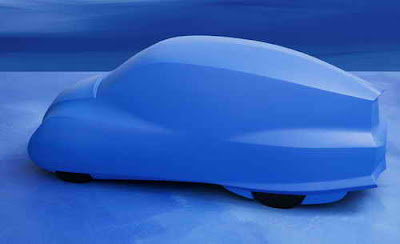
The Mercedes Bionic Car equipped with a diesel engine with BLUETEC technology, the Mercedes Bionic Car has a power output of 140 hp. The lightweight concept derived from nature, the car features a clean and economical high-tech diesel engine with BLUETEC technology, which plays a major part in cutting fuel consumption and reducing emissions by a substantial margin, the Mercedes Benz bionic car consumes just 4.3 liters of fuel per 100 kilometers making it 20 percent more economical than a comparable production model. The figure comes in at around 70 miles per gallon 30 percent better than a standard production car. When driving at a constant speed of 90 km/h, the direct injection model consumes a 2.8 liters of diesel per 100 kilometers equivalent to 84 miles per gallon. Despite its unusual-looking shape, the fish is extremely aerodynamic and can therefore move using a minimal amount of energy. It is also able to withstand high pressures and, thanks to an outer skin consisting of hexagonal bone plates, can survive unscathed following collisions with corals or other sea dwellers. In free flow, its body has an outstandingly low cd value of 0.06. These characteristics are also ideal ingredients for a car designed to achieve the best possible levels of energy efficiency and passenger safety. The result is a two-door vehicle with four comfortable, individual seats and a drop shaped design that is 4.24 meters long, 1.82 meters wide and 1.59 meters high. The bone plate skeleton of the boxfish demonstrates how nature is able to achieve maximum strength with a lightweight design. this honeycomb design method increases stiffness by up to 40 percent, while the weight is reduced by around 30 percent, based on calculations using the SKO method. The SKO method has since been used for producing components such as the engine support arms that are fitted on some rural service buses.

Hyundai Blue Will Hybrid Car

Hyundai Blue-Will Hybrid CarHyundai Blue-Will Hybrid Car
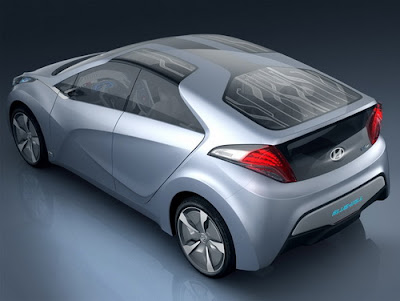
Hyundai Blue-Will is a plug-in hybrid concept car. Hyundai Blue-Will concept is powered by a Gasoline Direct Injected 1.6-litre engine with Continuously Variable Transmission and a 100kw electric motor. Hyundai Blue-Will’s electric power is stored in Lithium Ion Polymer batteries which, together with the fuel tank, are located under the rear seats. Hyundai Blue-Will, has exceptionally advanced technology crammed inside its striking bodyshell. Recycled PET soft drink bottles were used to make the material for the headlamp bezels while use has also been made of bio-plastics: PLA for the interior while PA11 was specified for the engine cover. These materials are made from plants extract rather than fossil fuels and are bio-degradable. Hyundai Blue-Will features  a 100kw electric motor which is at the heart of Hyundai’s parallel hybrid drive architecture. Hyundai Blue-Will's design flexibility is found on the panoramic roof. The glass area integrates dye-sensitized solar cells which can generate power for the batteries from the sun without impeding visibility.
Related Posts Plugin for WordPress, Blogger...