Monday, March 14, 2011
Cool Honda Splendor Concept Design
Tuesday, February 15, 2011
Suzuki GSX-R600 Beauty Concept Design
Suzuki has redesigned GSX-R600 and declare the newest edition is better than its predecessor models 2010 and rival. Motorsport is very proud GSX-R600, equipped with Showa Big Piston Forks, 9 kg lighter, in the wheelbase was now about 15 mm shorter and more comfortable when driving.
In addition to the body, Suzuki GSX-R600 engine fully the latest innovations, using a 599 cc engine DOHC, 16 valve, 4-stroke, 4 cylinder in line which is equipped with a liquid-cooled. At the time of reaching full speed even GSX-R600 can be stopped by both because security comes with brembo brake Monoblock. Changes in the form of highly visible from the previous generation by using four water intakes stacked to the sides of the slimmer headlamp, so that the position of the headlamp nearly equal to his brother GSX-R600, 2010 and GSX-R 750.
Kawasaki ZX-10R Ninja Concept Design
In Britain, the Ninja ZX-10R comes wrapped in black or green, and equipped Kawasaki Intelligent anti-lock Brake System (KIRB) plus S-KTRC which minimizes wheel slip phenomenon on the track slippery. "With this launch, and dikitu with several other models in the UK on the 27th of January, we think this is a good beginning of the year in 2011 for Kawasaki dealer and rider products,"continued Michael.
When compared with previous generations, ZX-10R has a lighter weight with a total of only 197 kg, and more power. This latest product uses the engine capacity of 988cc, 16 valve, DOHC, water cooled, four-cylinder. The machine is able to generate power to 197 hp or 207 with additional modifications. Kawasaki Ninja ZX-10R 2011 will be sold at a price of EUR 18.600 or approximately USD 167 million and USD 20.200 or approximately USD 181 million for models equipped with ABS.
Monday, December 27, 2010
Honda CBR Series Variation Design


"The primary factor contributing to this decision is the current global economic situation and its impact on Honda. This was an extremely difficult decision to make as the racing spirit reaches to the very core of Honda. While it is unfortunate that the current economic conditions led us to take this action, rest assured that Honda¹s deep-seated passion for racing has not been, and will never be, diminished."
Honda CBR models are a series of sport bikes several of which (400RR, 600RR, 900RR, 929RR, 954RR and 1000RR) are marketed as race replicas, having the suffix RR after the engine size designation. With the exception of the single cylinder CBR125 and CBR150, all CBR motorbikes have inline engines (as compared to the V-twins in the VT, VTR and VF/VFR series). Less sporting models with inline engines make up the CB Series.
Honda's tradition of winning continues for 2010, as the CBR600RR returns with its unbeatable combination of MotoGP-bred tech, power, light weight, and handling, highlighted by Honda's revolutionary Combined Anti-Lock Braking System (C-ABS), the first ever on a production supersport motorcycle. And with three trick new color schemes to choose from, you'll not only be on the best 600-class sportbike going, you'll also be on the best-looking machine as well.
Minerva Motor Riders Concept Design

Through testing which includes such things as a matter of a new motor that hit the market, became a byword otomania, as well as other data such as the intensity of features, performance levels and certainly kemassalan mounts, then diseleksilah various motors in order to achieve an award in Mr. Testo Award 2010.
Minerva Sachs product design excellence is of course not separated from the joint cooperation with the UK Megelli who always gives a touch of design in every product of Minerva Sachs. Similarly, reliable performance, thanks to the cooperation is carried out by the Minerva with Sachs Germany in developing products Minerva engine to produce engine with international quality standards.
Monday, August 9, 2010
Variation Motors Funny Image Design
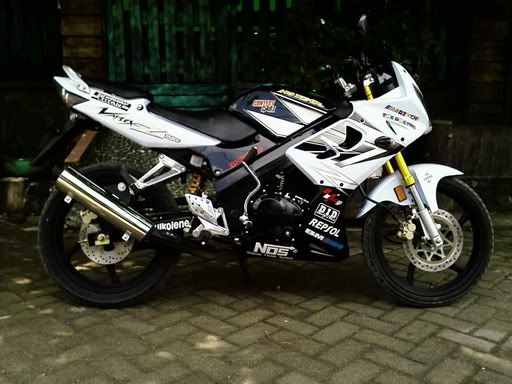
Minerva Motor Trands Design


Minerva Sachs product design excellence is certainly not out of joint Megelli Cooperation with the UK which continues to provide a touch of design in every product of Minerva Sachs. Similarly, reliable performance, thanks to the cooperation is carried out by the Minerva with Sachs Germany in developing products Minerva engine to produce engine with international quality standards.
Thursday, May 6, 2010
New Car
Thursday, April 1, 2010
Blocking Engineering Experiments - Part 03
Design of Engineering Experiments
Part 3 – The Blocking Principle
- Text Reference, Chapter 4
- Blocking and nuisance factors
- The randomized complete block design or the RCBD
- Extension of the ANOVA to the RCBD
- Other blocking scenarios…Latin square designs
The Blocking Principle
- Blocking is a technique for dealing with nuisance factors
- A nuisance factor is a factor that probably has some effect on the response, but it’s of no interest to the experimenter…however, the variability it transmits to the response needs to be minimized
- Typical nuisance factors include batches of raw material, operators, pieces of test equipment, time (shifts, days, etc.), different experimental units
- Many industrial experiments involve blocking (or should)
- Failure to block is a common flaw in designing an experiment (consequences?)
3
The Blocking Principle
- If the nuisance variable is known and controllable, we use blocking
- If the nuisance factor is known and uncontrollable, sometimes we can use the analysis of covariance (see Chapter 15) to remove the effect of the nuisance factor from the analysis
- If the nuisance factor is unknown and uncontrollable (a “lurking” variable), we hope that randomization balances out its impact across the experiment
- Sometimes several sources of variability are combined in a block, so the block becomes an aggregate variable
4
The Hardness Testing Example
- Text reference, pg 120
- We wish to determine whether 4 different tips produce different (mean) hardness reading on a Rockwell hardness tester
- Gauge & measurement systems capability studies are frequent areas for applying DOX
- Assignment of the tips to an experimental unit; that is, a test coupon
- Structure of a completely randomized experiment
- The test coupons are a source of nuisance variability
- Alternatively, the experimenter may want to test the tips across coupons of various hardness levels
- The need for blocking.....................
5
Design of Engineering Experiments
Part 3 – The Blocking Principle
- Text Reference, Chapter 4
- Blocking and nuisance factors
- The randomized complete block design or the RCBD
- Extension of the ANOVA to the RCBD
- Other blocking scenarios…Latin square designs
The Blocking Principle
- Blocking is a technique for dealing with nuisance factors
- A nuisance factor is a factor that probably has some effect on the response, but it’s of no interest to the experimenter…however, the variability it transmits to the response needs to be minimized
- Typical nuisance factors include batches of raw material, operators, pieces of test equipment, time (shifts, days, etc.), different experimental units
- Many industrial experiments involve blocking (or should)
- Failure to block is a common flaw in designing an experiment (consequences?)
3
The Blocking Principle
- If the nuisance variable is known and controllable, we use blocking
- If the nuisance factor is known and uncontrollable, sometimes we can use the analysis of covariance (see Chapter 15) to remove the effect of the nuisance factor from the analysis
- If the nuisance factor is unknown and uncontrollable (a “lurking” variable), we hope that randomization balances out its impact across the experiment
- Sometimes several sources of variability are combined in a block, so the block becomes an aggregate variable
4
The Hardness Testing Example
- Text reference, pg 120
- We wish to determine whether 4 different tips produce different (mean) hardness reading on a Rockwell hardness tester
- Gauge & measurement systems capability studies are frequent areas for applying DOX
- Assignment of the tips to an experimental unit; that is, a test coupon
- Structure of a completely randomized experiment
- The test coupons are a source of nuisance variability
- Alternatively, the experimenter may want to test the tips across coupons of various hardness levels
- The need for blocking
The Hardness Testing Example
- To conduct this experiment as a RCBD, assign all 4 tips to each coupon
- Each coupon is called a “block”; that is, it’s a more homogenous experimental unit on which to test the tips
- Variability between blocks can be large, variability within a block should be relatively small
- In general, a block is a specific level of the nuisance factor
- A complete replicate of the basic experiment is conducted in each block
- A block represents a restriction on randomization
- All runs within a block are randomized
6
The Hardness Testing Example
- Suppose that we use b = 4 blocks:
JAPANESE-STYLE GARDEN

JAPANESE-STYLE GARDEN is a knowledge for design garden. This is very interesting for studied. JAPANESE-STYLE GARDEN is kind of something different than else-style garden, because JAPANESE-STYLE GARDEN made your own garden unique and satisfied for life.
General Sites
JGarden
http://www.jgarden.org/
This site offers a wide variety of information about
Japanese gardens. It features a “garden of the month”
(usually generously illustrated with photos) and a
database of Japanese gardens. It is a non-profit,
educational project aimed at raising awareness of
Japanese gardens.
Special Feature: Japanese Gardens
http://web-japan.org/nipponia/nipponia8/special.html
This site notes that landscape gardening in Japan has had
a 1,300-year history, so naturally Japanese gardens come
in many different styles. This special feature of Nipponia
magazine looks at the Japanese love of gardening, and
what it is about landscape gardens that people find
especially appealing. See also “Creating Gardens”
(http://web-japan.org/nipponia/nipponia8/sp03.html) in
the same issue.
Japanese Garden
http://mcel.pacificu.edu/as/students/chee/garden.html
Provides a general overview of Japanese gardens and
includes numerous pictures.
Japanese Garden Design Principles: On the path
toward a successful garden
http://www.helpfulgardener.com/japanese/2003/design.ht
ml
Discusses the basic design principles of Japanese-style
gardens.....
JAPANESE-STYLE GARDEN is a knowledge for design garden. This is very interesting for studied. JAPANESE-STYLE GARDEN is kind of something different than else-style garden, because JAPANESE-STYLE GARDEN made your own garden unique and satisfied for life.
http://www.jgarden.org/
This site offers a wide variety of information about
Japanese gardens. It features a “garden of the month”
(usually generously illustrated with photos) and a
database of Japanese gardens. It is a non-profit,
educational project aimed at raising awareness of
Japanese gardens.
Special Feature: Japanese Gardens
http://web-japan.org/nipponia/nipponia8/special.html
This site notes that landscape gardening in Japan has had
a 1,300-year history, so naturally Japanese gardens come
in many different styles. This special feature of Nipponia
magazine looks at the Japanese love of gardening, and
what it is about landscape gardens that people find
especially appealing. See also “Creating Gardens”
(http://web-japan.org/nipponia/nipponia8/sp03.html) in
the same issue.
Japanese Garden
http://mcel.pacificu.edu/as/students/chee/garden.html
Provides a general overview of Japanese gardens and
includes numerous pictures.
Japanese Garden Design Principles: On the path
toward a successful garden
http://www.helpfulgardener.com/japanese/2003/design.ht
ml
Discusses the basic design principles of Japanese-style
gardens.....
Sunday, March 28, 2010
Design
Design is the planning that lays the basis for the making of every object or system. It can be used both as a noun and as a verb and, in a broader way, it means applied arts and engineering (See design disciplines below). As a verb, "to design" refers to the process of originating and developing a plan for a product, structure, system, or component with intention[1]. As a noun, "a design" is used for either the final (solution) plan (e.g. proposal, drawing, model, description) or the result of implementing that plan in the form of the final product of a design process[2]. This classification aside, in its broadest sense no other limitations exist and the final product can be anything from clothing to graphical user interfaces to skyscrapers. Even virtual concepts such as corporate identity and cultural traditions such as celebration of certain holidays[3] are sometimes designed. More recently, processes (in general) have also been treated as products of design, giving new meaning to the term process design.
The person designing is called a designer, which is also a term used for people who work professionally in one of the various design areas, usually also specifying which area is being dealt with (such as a fashion designer, concept designer or web designer). Designing often requires a designer to consider the aesthetic, functional, and many other aspects of an object or a process, which usually requires considerable research, thought, modeling, interactive adjustment, and re-design. With such a broad definition, there is no universal language or unifying institution for designers of all disciplines. This allows for many differing philosophies and approaches toward the subject. However, serious study of design demands increased focus on the design process.source site: http://en.wikipedia.org/wiki/Design